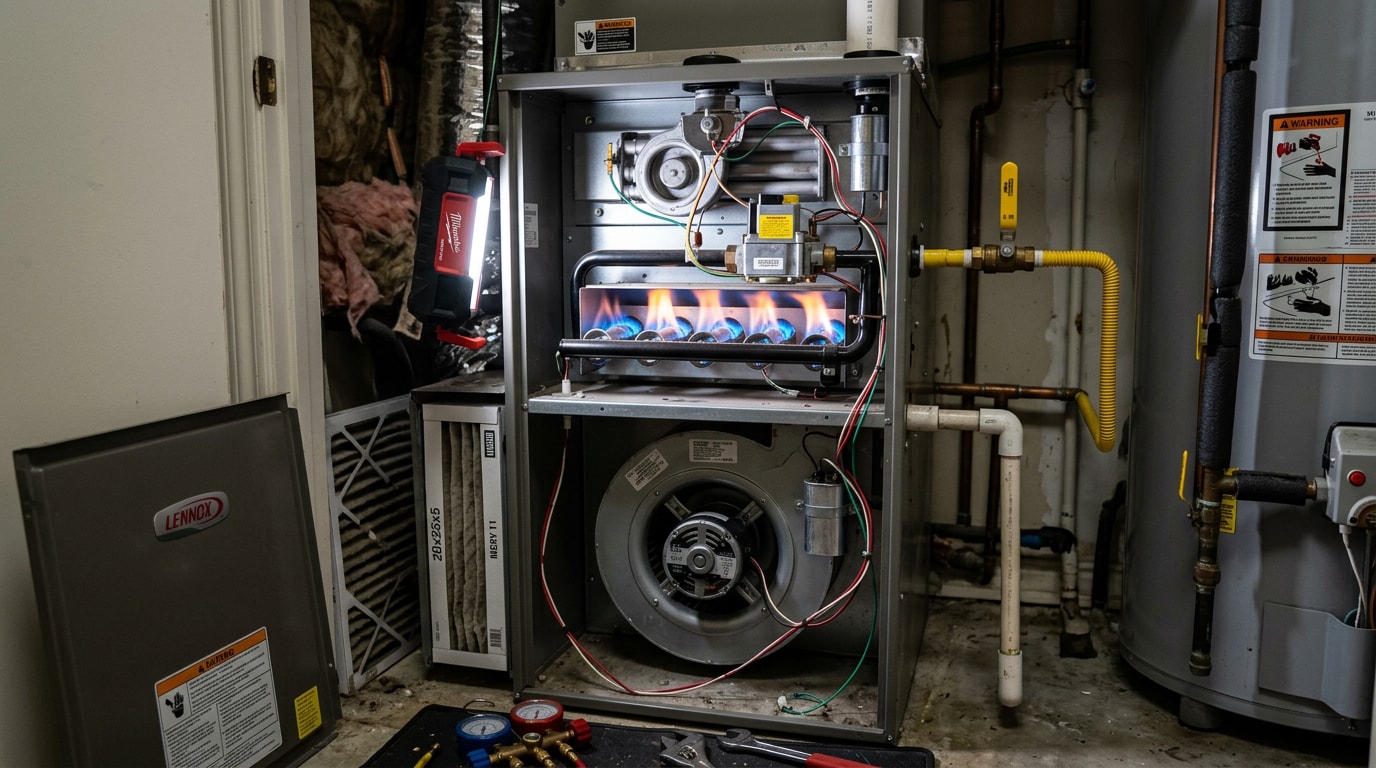
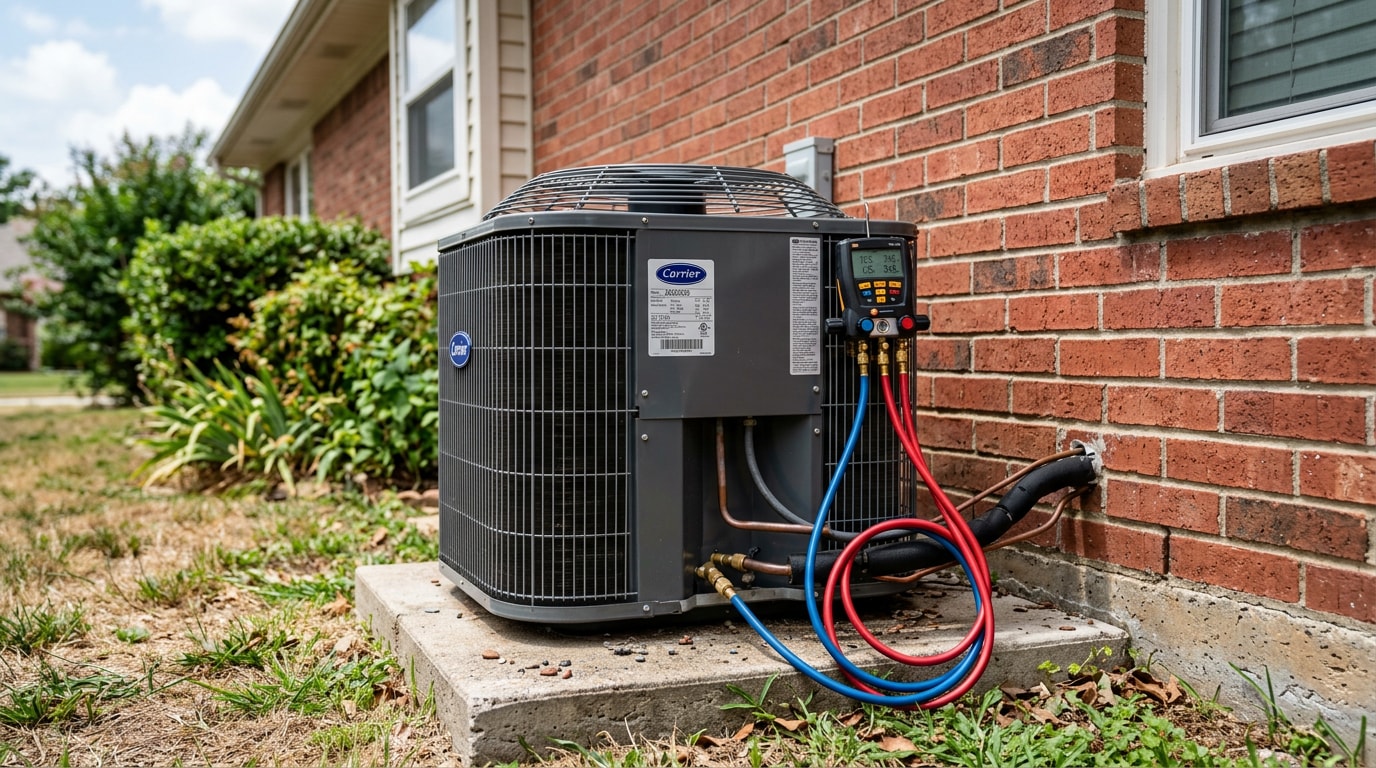
HVAC commissioning in Hearne, TX is the verification step that confirms a new heating or cooling system was installed correctly and actually performs the way it's supposed to. It isn't an upsell tacked onto an installation invoice. It's the difference between a system that's merely turned on and one that's proven to work.
What Is HVAC Commissioning?
HVAC commissioning is the quality assurance process of verifying that a building's heating, ventilation, and air conditioning systems are designed, installed, tested, and capable of being operated and maintained according to the owner's needs. In plain terms, it confirms a brand-new system isn't just running, it's running correctly.
This is different from a basic install and startup, where a technician connects the equipment, flips it on, and checks that air comes out of the vents. Commissioning checks and tests every component against the manufacturer's specifications and the home's actual needs, not just whether the unit powers on.
Think of installation as building the car. Commissioning is the test drive that makes sure the brakes, steering, and engine all work together before you take it on the highway. If you want the full picture of what we check and why, our HVAC Contractor services page breaks down how commissioning fits into a complete installation.
Why HVAC Commissioning Matters
A system that's merely "installed" can run for years with hidden problems quietly draining your wallet and comfort. Commissioning exists to catch those problems before they become expensive habits.
Properly commissioned systems operate as designed, which means consistent comfort, better energy efficiency, and cleaner indoor air. The payoff shows up in a few specific ways:
- Lower operating costs. A correctly set system doesn't fight itself to maintain temperature.
- Fewer warranty disputes. Manufacturers can deny claims tied to installation errors, and commissioning documents that the system was set up right.
- Longer equipment life. Components under correct load and charge simply wear slower.
- Better indoor air quality. Properly balanced airflow reduces hot/cold spots and humidity swings.
The scale of the problem is bigger than most homeowners expect. A 2018 Department of Energy study found that 70-90% of newly installed residential HVAC systems were installed with significant, detectable faults. Duct leakage compounds the issue further: in typical homes, about 20 to 30 percent of the air that moves through the duct system is lost due to leaks, holes, and poorly installed ducts.
Commissioning is how those issues get found before they turn into a summer with a struggling AC. If you're planning a new install, our New AC Installation page shows how commissioning is built into the process from day one, not bolted on at the end.
HVAC Commissioning Challenges in Hearne, TX's Climate
Hearne sits in a humid subtropical climate zone within the Bryan-College Station metro area, and that classification is the reason local commissioning matters more here than in drier parts of the country. Long, humid summers punish any system that isn't dialed in correctly.
Air conditioning systems in this region typically run six to eight months out of the year. That's a lot of runtime riding on equipment that was either set up correctly from day one or wasn't.
An improperly commissioned system in Hearne tends to show its weaknesses in two specific ways:
- It struggles to pull humidity out of the air even when the thermostat reads fine.
- It faces a cooling-load season long enough that small inefficiencies add up to real money over a full year.
A system that's slightly undercharged or poorly balanced might limp through a mild spring, but it gets exposed the first time Hearne hits a stretch of 100-degree days with thick humidity. See how our team handles installs and commissioning specifically in this area on our Hearne, TX service area page.
The HVAC Commissioning Process: Step-by-Step
HVAC commissioning is a structured, multi-phase process. Each phase builds on the one before it, starting with preparation and ending with documented, functional testing.
Pre-Commissioning Preparation Phase
Before any testing happens, a technician works through a pre-commissioning checklist covering equipment specifications, installation documentation, and basic readiness checks. This confirms the right equipment was installed, that it matches the design plans, and that nothing was missed during the physical install.
This step matters because it's much easier to catch an issue here than after the system has been running for months. A mismatched component or a skipped step in the installation process is far cheaper to fix now than after it causes a breakdown in July.
Electrical System Commissioning
Electrical checks come first in the testing sequence because nothing else can be safely tested until power, grounding, and safety are confirmed. Running refrigerant or airflow tests on a system with a wiring problem risks damaging equipment or creating a safety hazard.
During electrical commissioning, a technician verifies voltage levels, checks connections for proper torque and corrosion, confirms disconnects are functioning, and performs grounding verification. OSHA's electrical standards are based on the National Fire Protection Association's NFPA 70 (National Electrical Code) and NFPA 70E , and a qualified technician follows that framework on every visit. You can read the agency's overview on the OSHA electrical safety page. Skipping this step isn't just a performance risk, it's a safety one.
Refrigerant System Commissioning
Refrigerant charge verification is one of the most important, and most commonly skipped, steps in the entire process. An incorrect charge is one of the leading causes of poor efficiency in otherwise properly installed systems, and it isn't something you can diagnose by eye.
Technicians check superheat and subcooling values against manufacturer specifications and run pressure tests to confirm the system is operating within its intended range. This work also has to follow federal handling rules. Anyone purchasing refrigerant for use in a stationary appliance or handling refrigerants, such as air-conditioning and refrigeration service technicians, must be section 608-certified , per the EPA's Section 608 program. A system that's even slightly over- or under-charged runs less efficiently and wears out faster, which is exactly the kind of hidden problem commissioning is designed to catch.
Commissioning Investment Analysis
Cost is usually the first question homeowners ask, and it's a fair one since commissioning is an added line item on top of installation. The honest answer depends heavily on system complexity, so here's what 2026 pricing generally looks like across three common tiers.
| System Type | Typical Cost (2026) | What's Included |
|---|---|---|
| Basic residential system | $500-$1,000 | Single-stage equipment, standard ductwork, core functional and electrical testing |
| Complex/zoned residential system | $1,000-$2,000 | Zoning controls, variable-speed equipment, smart home integration, expanded testing |
| Light commercial system | $2,000+ | Larger equipment, multiple zones, extended documentation and compliance checks |
The jump in price across tiers isn't arbitrary. Zoning adds dampers and control points that each need independent testing. Variable-speed equipment requires software configuration on top of physical checks, and commercial systems have more equipment and often stricter documentation requirements.
Weigh the commissioning investment against the alternative: a system that runs inefficiently for years or fails prematurely because a problem went uncaught. If cost is a concern, ask about our HVAC Maintenance Agreement options to spread ongoing costs out after installation.
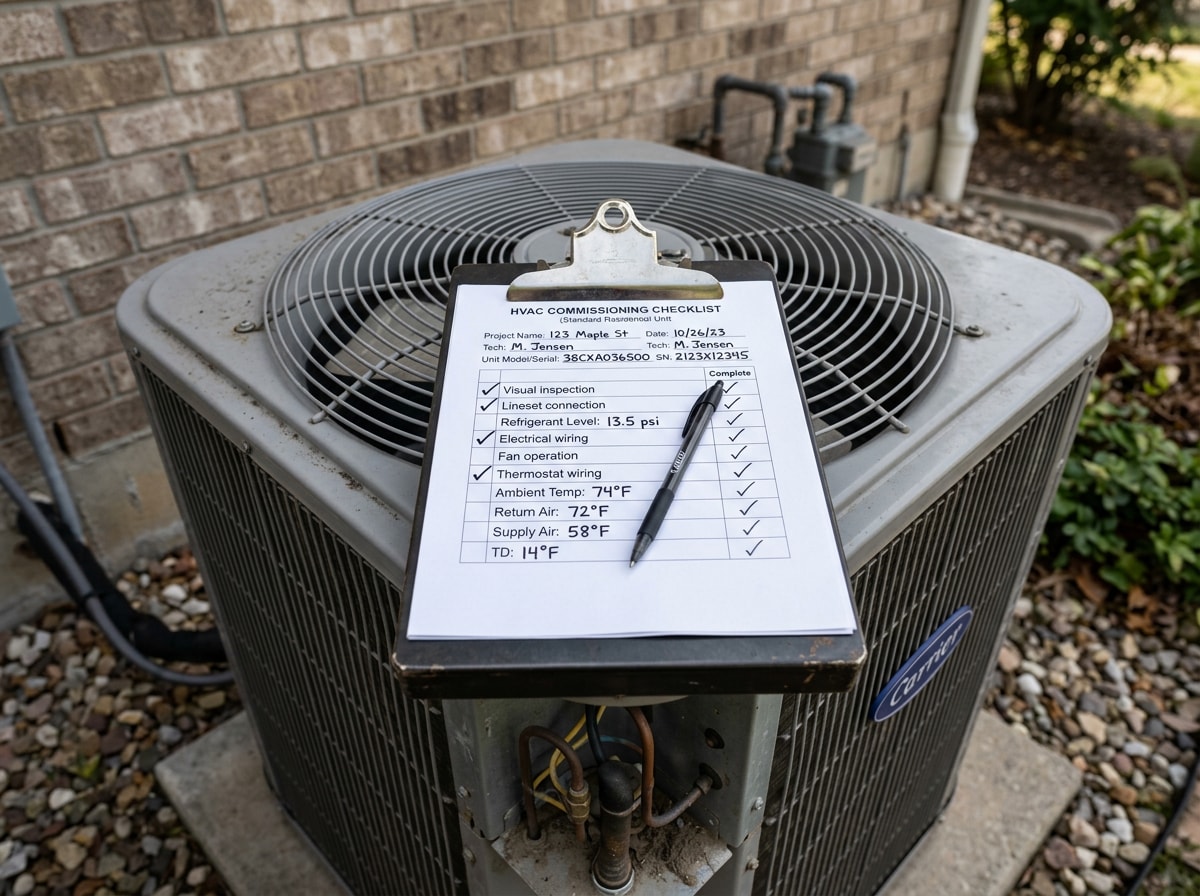
The HVAC Commissioning Checklist: What's Included
The commissioning checklist keeps nothing from slipping through the cracks. It covers everything from design validation to final handover, confirming the system is safe, efficient, and fully functional before anyone calls the job done.
System Design Verification
Confirming the system design matches the building's real needs is the checklist's starting point, and for good reason: poor sizing is one of the most common root causes of underperformance. A unit that's too large short-cycles and struggles with humidity; one that's too small runs constantly and never quite keeps up.
Design review checks the original sizing calculations against the home's square footage, insulation, window placement, and local climate demands. Catching a sizing mismatch here, before the system has run a full season, saves a homeowner from a much larger correction down the road.
Documentation and Training
At the end of commissioning, a homeowner should walk away with more than a working system. They should get a commissioning report and a walkthrough of how to operate and maintain it.
Homeowner training typically covers thermostat programming, filter replacement schedules, and basic troubleshooting signs to watch for. Without this step, even a perfectly commissioned system can be mishandled simply because no one explained how to run it.
Common Issues Found During HVAC Commissioning
Commissioning regularly turns up problems that would otherwise go unnoticed until they caused a bigger failure:
- Airflow imbalances. One room runs cold while another barely gets any air, usually from poorly adjusted dampers or undersized ductwork.
- Control miscalibration. Thermostats or zone controllers aren't communicating with the equipment correctly, leading to short cycling or inconsistent temperatures.
- Incorrect refrigerant charge. This quietly reduces efficiency with no obvious symptom until the utility bill arrives.
Catching these now is dramatically cheaper than waiting for a callback. A damper adjustment during commissioning takes minutes. The same issue discovered after a compressor has strained against it for a year can mean a much larger repair bill. Our HVAC Inspection service catches many of these same issues on systems that were never formally commissioned.
The Role of Technology in HVAC Commissioning
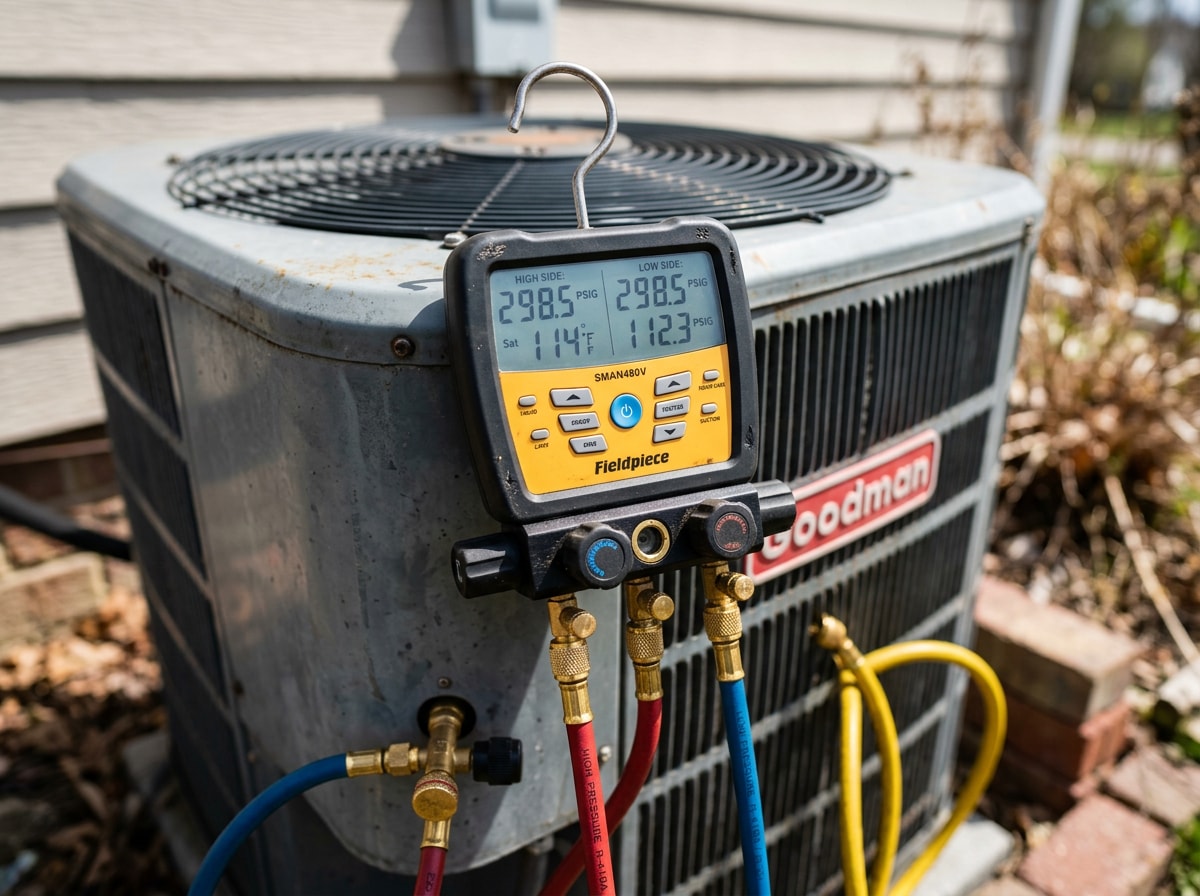
Commissioning accuracy has improved with the shift from analog gauges to digital diagnostic tools. Older analog manifolds required a technician to read a needle against a dial and make a judgment call. Digital tools remove much of that guesswork.
Many digital manifold sets now include Bluetooth data logging, which lets a technician record superheat, subcooling, and pressure readings over time rather than relying on a single snapshot. That matters for smart diagnostics generally, including the connected thermostats and sensors common in newer installs.
In our own service calls across the Brazos Valley, the systems that come back for callbacks are almost never the ones that went through a documented commissioning process, they're the ones where a tech eyeballed the charge and moved on. That pattern is exactly why we treat commissioning as standard, not optional.
Hire a Professional for HVAC Commissioning in Hearne, TX
Commissioning isn't something a general handyman or a rushed installer should attempt as an afterthought. It takes a licensed HVAC technician with the right diagnostic tools, training, and patience to work through every step methodically: electrical, refrigerant, airflow, and documentation.
For homeowners and business owners in Hearne, that means looking for a local provider who treats commissioning as a standard part of installation, not an optional extra. Advantage Cooling & Heating has worked across the Brazos Valley for nearly three decades, and we apply that same commissioning standard whether we're installing a new system or evaluating an existing one. Homeowners who also want to cut utility costs further sometimes pair a new install with a solar water heating system in Hearne, TX for additional savings.
A properly commissioned system is the difference between hoping your new equipment works and knowing it does. Schedule a service appointment with our team, and we'll walk you through exactly what commissioning on your property would involve. You can also learn more about our full range of work on our homepage.
FAQ
How Long Does HVAC Commissioning Take?
Full commissioning for a single residential system typically takes 45 minutes to about an hour and a half, depending on system complexity. Simpler systems with fewer zones finish on the faster end of that range.
Larger homes with zoned systems, or commercial properties, take longer since there's more equipment and more documentation involved. A technician won't rush this step, because the point is thorough testing, not a quick check.
How Much Does HVAC Commissioning Cost?
Costs generally range from $500 for a basic residential system up to $2,000 or more for complex or light commercial setups, depending on zoning, equipment type, and smart integration. The full breakdown by tier is covered in the Commissioning Investment Analysis section above.
As a general rule, the more zones and automation a system has, the more testing it requires, and the higher the cost climbs.
Is HVAC Commissioning Required by Code?
Most residential HVAC systems in Texas are not legally required to be commissioned, though it's strongly recommended for performance and warranty protection. Commercial buildings often face stricter requirements, since certain energy codes set commissioning expectations based on building size and system type.
For a typical Hearne homeowner, commissioning is a choice rather than a mandate, but it's one that pays off in reliability.
Why Doesn't Every HVAC Company Offer Commissioning?
Commissioning takes extra time, specialized diagnostic tools, and technician training that not every company invests in. Skipping it lets some contractors quote lower installation prices and finish jobs faster.
The tradeoff is that a standard install without commissioning leaves more room for hidden issues, like airflow imbalances, incorrect refrigerant charge, or control problems, to go undetected until they cause bigger, costlier failures later.