A furnace won't stay lit in Brenham, TX for one of a handful of predictable reasons, and nearly all of them trace back to a safety switch doing exactly what it's built to do. The burners fire, run for a few seconds to a few minutes, then cut out, which means a control board somewhere in the ignition chain decided conditions weren't safe enough to keep the gas valve open. Here's how to read the symptoms, find the part responsible, and decide whether this is a five-minute fix or a call-a-pro situation.
Quick Answer: Why Your Furnace Won't Stay Lit
A dirty flame sensor is the single most common reason a furnace won't stay lit. Soot or corrosion blocks the tiny signal the sensor needs to confirm a flame is present, so the control board shuts off gas as a precaution. Other frequent culprits include a cracked igniter, low gas pressure, or a clogged air filter that restricts airflow enough to trip a safety switch.
The table below maps the most common symptoms to their likely cause before you dig further. If your symptoms don't clear up after basic troubleshooting, a furnace repair specialist can pinpoint the exact part at fault without guesswork.
| When It Happens | Most Likely Cause | What To Check First |
|---|---|---|
| Shuts off in the first 3-5 seconds | Pressure switch or draft inducer motor | Listen for the inducer spinning up before gas opens |
| Lights, then dies anywhere from a few seconds to a few minutes later | Dirty or misaligned flame sensor | The metal sensor rod near the burners |
| Short cycles every few minutes, repeating | Gas valve, control board, or airflow restriction | Air filter age and condition |
| Clicks repeatedly but never ignites | Failing igniter or no gas reaching the valve | Igniter glow/visible cracks, gas shutoff position |
| Older furnace, pilot won't hold | Worn thermocouple or a drafty pilot assembly | Pilot flame size and position over the sensor |
Why a Furnace Shuts Itself Off During Ignition
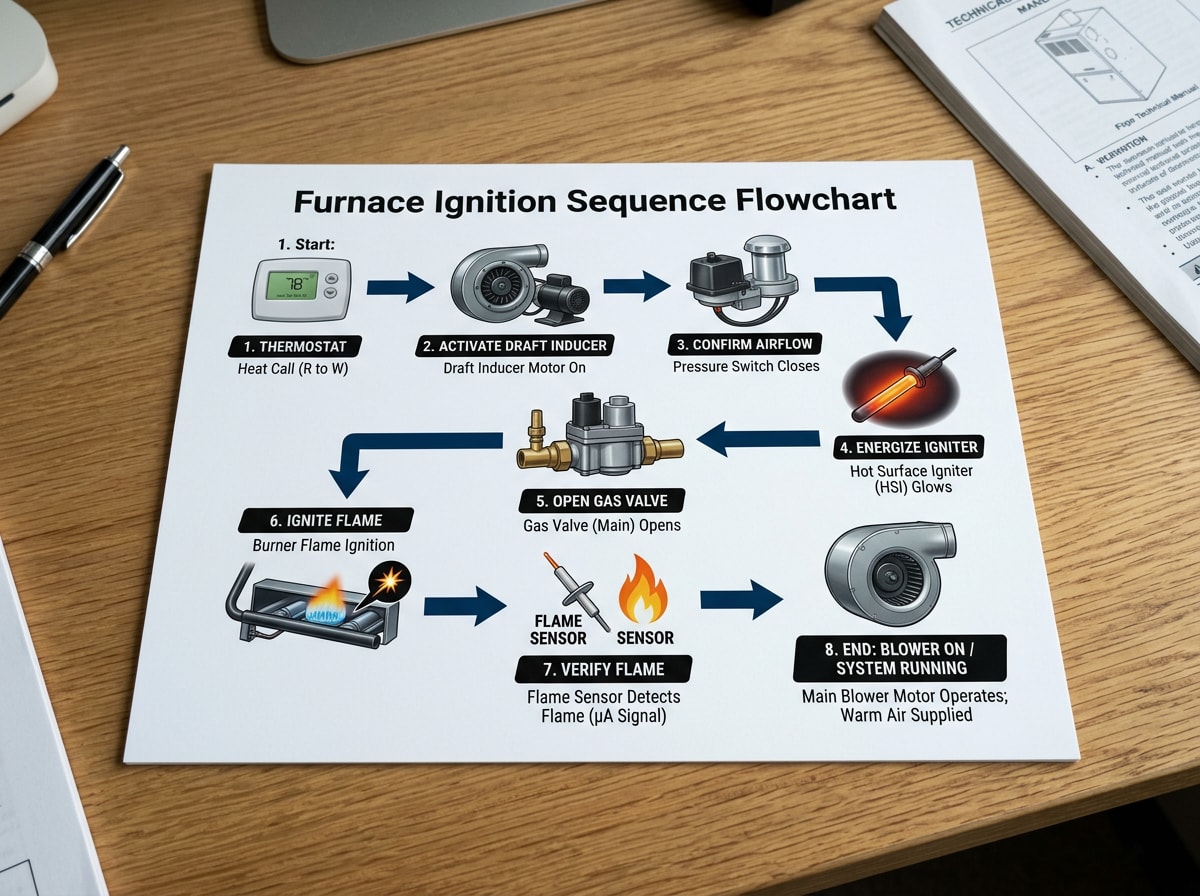
Modern furnaces run a strict, computer-controlled startup sequence every time the thermostat calls for heat. The draft inducer motor spins up first to clear the heat exchanger, then the pressure switch has to confirm safe venting before gas is even allowed to flow.
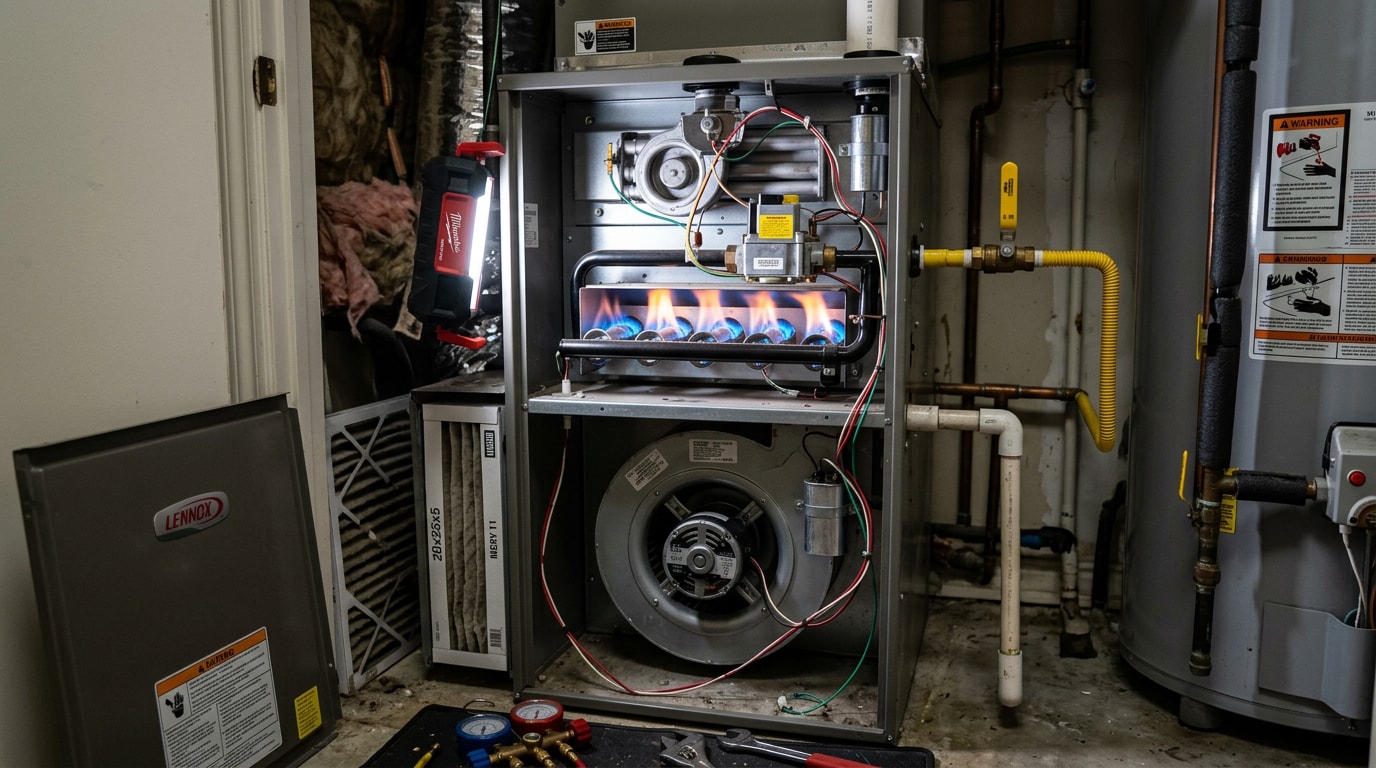
Once pressure checks out, the igniter heats up, the gas valve opens, and the burners light. Within a few seconds the flame sensor has to detect a steady flame and report that back to the control board. A dirty or faulty flame sensor is one of the most common reasons furnaces fail to stay lit or shut off shortly after igniting, and the system is designed to close the gas valve the moment that confirmation doesn't arrive, rather than risk an unsafe condition.
Common Ignition & Flame Causes
Most "furnace won't stay lit" calls trace back to one of five components along the ignition and flame path, covered below roughly in the order they show up in service calls.
Dirty or Faulty Flame Sensor
A furnace that ignites then shuts off anywhere from a few seconds to a couple of minutes later is almost always a flame sensor problem. One furnace industry resource notes that a furnace igniting then shutting off after 3-5 seconds is the classic symptom of a dirty flame sensor, since the burners light but the system shuts down almost immediately because the sensor can't detect the flame through the buildup coating . A longer-running flame that dies after a few minutes points the same direction, just a slightly less severe case of the same buildup.
Cleaning the sensor is a reasonable DIY task:
- Turn off power to the furnace at the switch or breaker.
- Remove the sensor, usually held by a single screw.
- Gently rub the metal rod with fine steel wool or an emery cloth, never sandpaper that leaves grit behind.
- Reinstall and test.
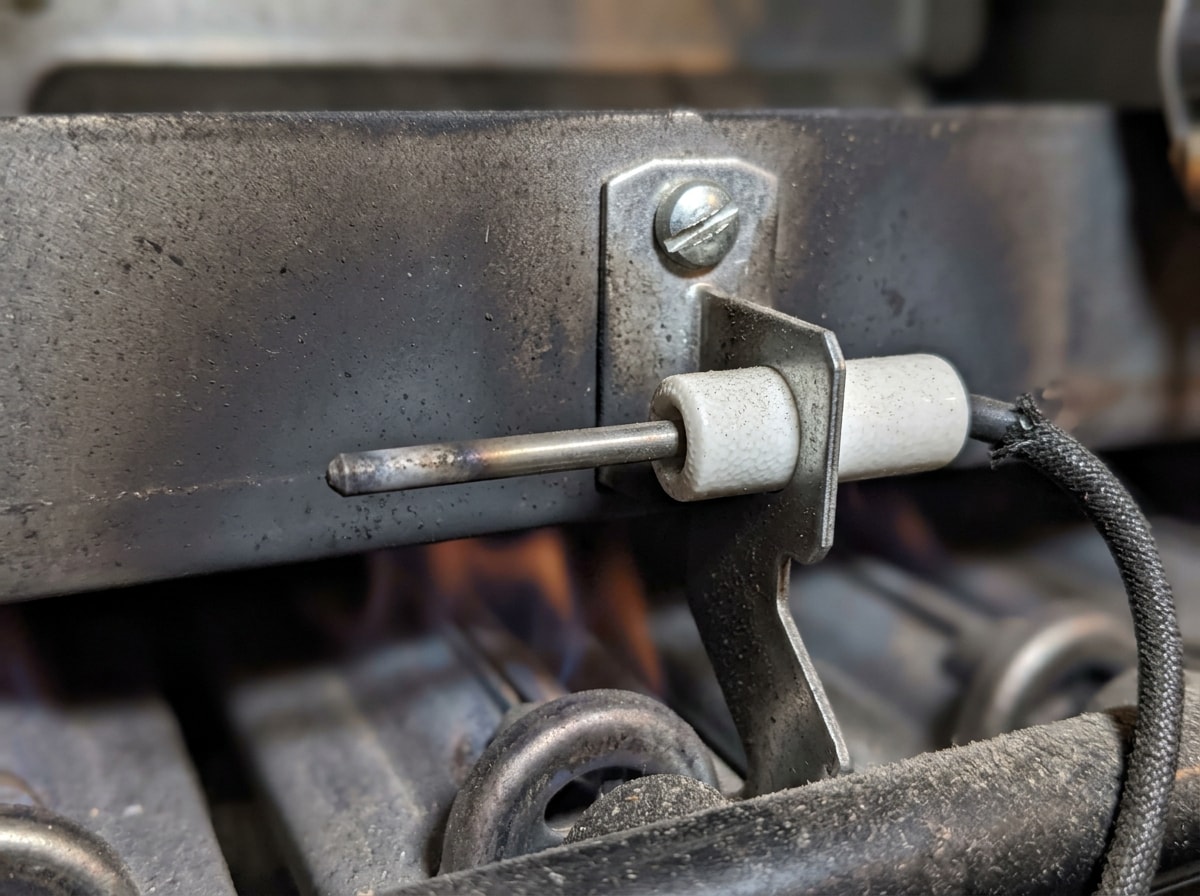
If you own a multimeter, a healthy sensor typically reads 2-6 microamps when the burner is on . Readings well below that, even after cleaning, usually mean the sensor itself needs replacing rather than another round of polishing. If cleaning doesn't resolve it after two attempts, stop troubleshooting, since a worn sensor or a deeper wiring issue is likely involved.
Failing Igniter
Most furnaces built in the last couple of decades use a hot surface igniter instead of a standing pilot. When it's failing, you'll often hear the furnace click or attempt ignition repeatedly without ever producing a steady flame.
A cracked igniter is especially common since the ceramic element is fragile and degrades with age. There's no cleaning fix here. If you can see a hairline crack or the element glows unevenly, it's time to schedule a repair rather than keep resetting the system.
Pilot Light & Thermocouple Problems (Older Furnaces)
If you have an older furnace with a standing pilot instead of electronic ignition, a pilot that won't stay lit usually comes down to a worn thermocouple, a clogged pilot tube, or a draft blowing the small flame off the sensor. The thermocouple's job is to sense the pilot's heat and keep the gas valve open; once it cools even briefly, the valve closes automatically as a safety measure.
Dust and debris can clog the thin pilot orifice over time, weakening the flame until it can't hold the thermocouple at the right temperature. These issues are specific to standing-pilot systems. If your furnace uses electronic ignition instead, this section doesn't apply to your situation.
Gas Valve, Supply & Pressure Issues
A stuck or faulty gas valve can let a furnace ignite briefly before cutting fuel flow, often because it isn't opening fully or isn't responding correctly to the control board's signal. Low gas pressure, from anything as simple as a partially closed shutoff valve to a utility-side issue, produces nearly identical symptoms since the burners can't sustain a strong enough flame.
This is not a do-it-yourself repair. NFPA 54/ANSI Z223.1, the National Fuel Gas Code, provides guidance for the safe installation and operation of fuel gas piping systems, appliances, equipment, and accessories , and diagnosing a gas valve or adjusting manifold pressure requires gauges, training, and knowledge of that code. Incorrect adjustments can create a genuine safety hazard. If you suspect a gas-related cause, this is the point to stop and call a licensed technician.
Ignition Control & Control Board Problems
The ignition control module manages every step of the startup sequence: timing the igniter, opening the gas valve, and reading the flame sensor's signal. When this board develops a fault, it can sometimes light the burners correctly, then shut the system down on a bad relay or a corrupted signal reading.
Control board problems are notoriously tricky to diagnose without a meter, since the board can look and sound like it's working normally while mishandling one specific step. If you've ruled out the flame sensor, igniter, and gas supply and the furnace still won't stay lit, the control board is a strong suspect, and one best left to a professional diagnostic visit.
Airflow & Mechanical Causes
Beyond the ignition components themselves, two mechanical issues commonly cause a furnace to shut down mid-cycle, especially in homes that go too long between filter changes.
Clogged Air Filter, Insufficient Airflow & Dirty Burners
A clogged filter restricts the air moving across the heat exchanger, and that restriction can trip safety switches that mistake low airflow for an overheating condition. Dirty burners cause a related but separate problem: grime starves the flame of oxygen, producing a weak, uneven burn that struggles to stay lit.
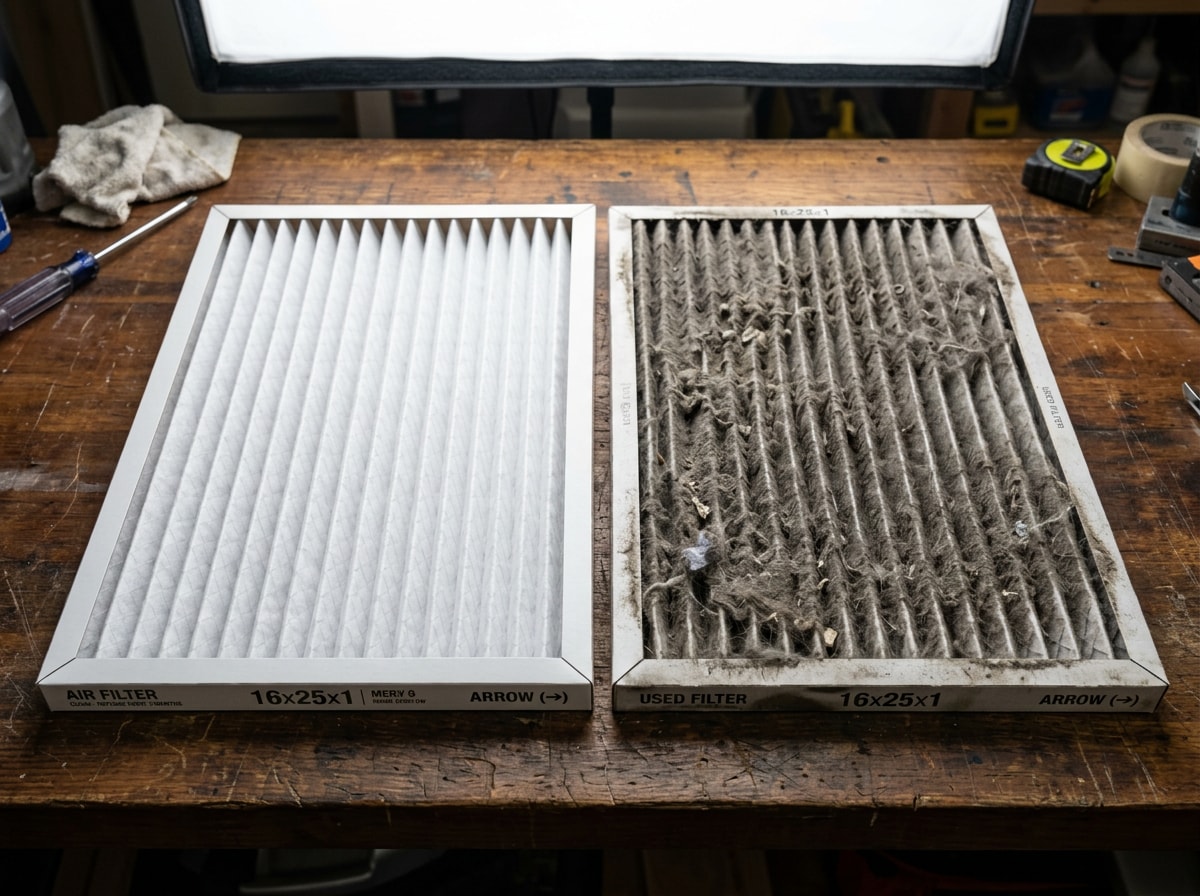
The filter fix is genuinely DIY-friendly. A dirty air filter will cause your heating and cooling system to work harder to distribute air throughout your home, which can increase energy costs and damage your equipment, so it's worth checking your filter once a month in your furnace . Burner cleaning and blower motor work, by contrast, require opening the furnace cabinet and should be left to a technician. As a general rule, furnace maintenance that includes a filter check every one to three months during heating season keeps both airflow and efficiency where they should be.
Overheating Heat Exchanger
The limit switch exists specifically to shut off gas and blower power when the heat exchanger gets hotter than it should, often because of restricted airflow or a venting problem elsewhere in the system. When that switch trips, the furnace behaves exactly like it has an ignition fault, even though the root cause is heat buildup.
A cracked heat exchanger deserves particular attention here, since it's a safety issue rather than a nuisance shutdown. Cracks can allow combustion byproducts to mix with heated air circulating through your home. Carbon monoxide is especially dangerous because it can't be seen, can't be smelled, and can't be heard , which is why this is not something to troubleshoot casually. If you smell anything unusual or suspect this cause, shut the furnace off and call a professional right away.
How a Professional Furnace Repair Service Can Help
A licensed HVAC technician arriving for a "furnace won't stay lit" call works through the same sequence covered above, but with testing equipment that makes diagnosis faster and more precise. That usually means cleaning or testing the flame sensor, checking the ignition control system and gas valve with a meter, verifying pilot or electronic ignition performance, and inspecting the filter and blower.
Our technicians who service Washington County often see flame sensors and pilot components foul up faster in older, rural propane setups, where seasonal humidity swings add to normal soot buildup. That's part of why a basic HVAC inspection before heating season tends to pay for itself here, catching a dirty sensor before it leaves you without heat on a cold morning. For furnace-specific maintenance between visits, see our furnace maintenance guide for Navasota homeowners, which covers the same components at the root of most "won't stay lit" calls.
Advantage Cooling is a licensed HVAC contractor serving homes throughout the Brenham, TX area. If you've worked through the DIY steps above and your furnace still won't stay lit, schedule service and we'll send a technician out with the right meters to find the exact part at fault, rather than replacing parts by guesswork.
FAQ
Why Does My Furnace Keep Shutting Off?
A furnace that keeps shutting off is almost always tripping a safety switch somewhere in the ignition sequence. The flame sensor and restricted airflow are the two most common triggers behind this kind of short cycling, both covered in detail above.
Can I Clean a Furnace Flame Sensor Myself?
Yes. With the furnace's power switched off, remove the sensor and gently clean the metal rod with fine steel wool or an emery cloth, then reinstall it. If cleaning doesn't resolve the issue after a couple of attempts, the sensor itself or another component likely needs professional attention.
Is a Dirty Flame Sensor Dangerous?
Not directly. A dirty flame sensor is actually the system working as intended, since it fails safe by shutting off gas rather than letting unburned fuel accumulate. That said, ignoring it leaves you without heat and can point to a different safety issue developing elsewhere.
What Happens If I Ignore a Faulty Flame Sensor?
A faulty flame sensor left unaddressed typically leads to repeated ignition lockouts and a furnace that simply won't produce heat reliably. Leaving it long enough increases the chance that a separate safety device will need to compensate, which isn't a risk worth taking.
How Long Does a Furnace Flame Sensor Last?
A flame sensor's typical lifespan runs several years, but soot buildup usually requires cleaning well before replacement is needed. Most technicians recommend replacement only after cleaning fails to restore a stable microamp reading.
Why Does My Pilot Light Keep Going Out?
On older furnaces, a pilot that won't hold usually means a worn thermocouple, a clogged pilot orifice, or a draft blowing the flame off the sensor. Cleaning the orifice or shielding the pilot from drafts sometimes helps, but a thermocouple that's actually failed needs to be replaced.
How Much Does It Cost to Fix a Furnace That Won't Stay Lit?
Cost depends entirely on which part failed. A flame sensor cleaning is close to free if you do it yourself, while replacing an ignition module typically runs in the $300 to $400 range for parts and labor as a rough example, though exact pricing varies by furnace model and local market.
Is It Safe to Keep Resetting My Furnace Myself?
Resetting the system once or twice to see if a fix holds is generally fine. Repeated resets without finding the actual cause aren't, since you're overriding a safety sequence that's working as designed every time you do it. If a reset doesn't hold after two tries, stop and call a technician.