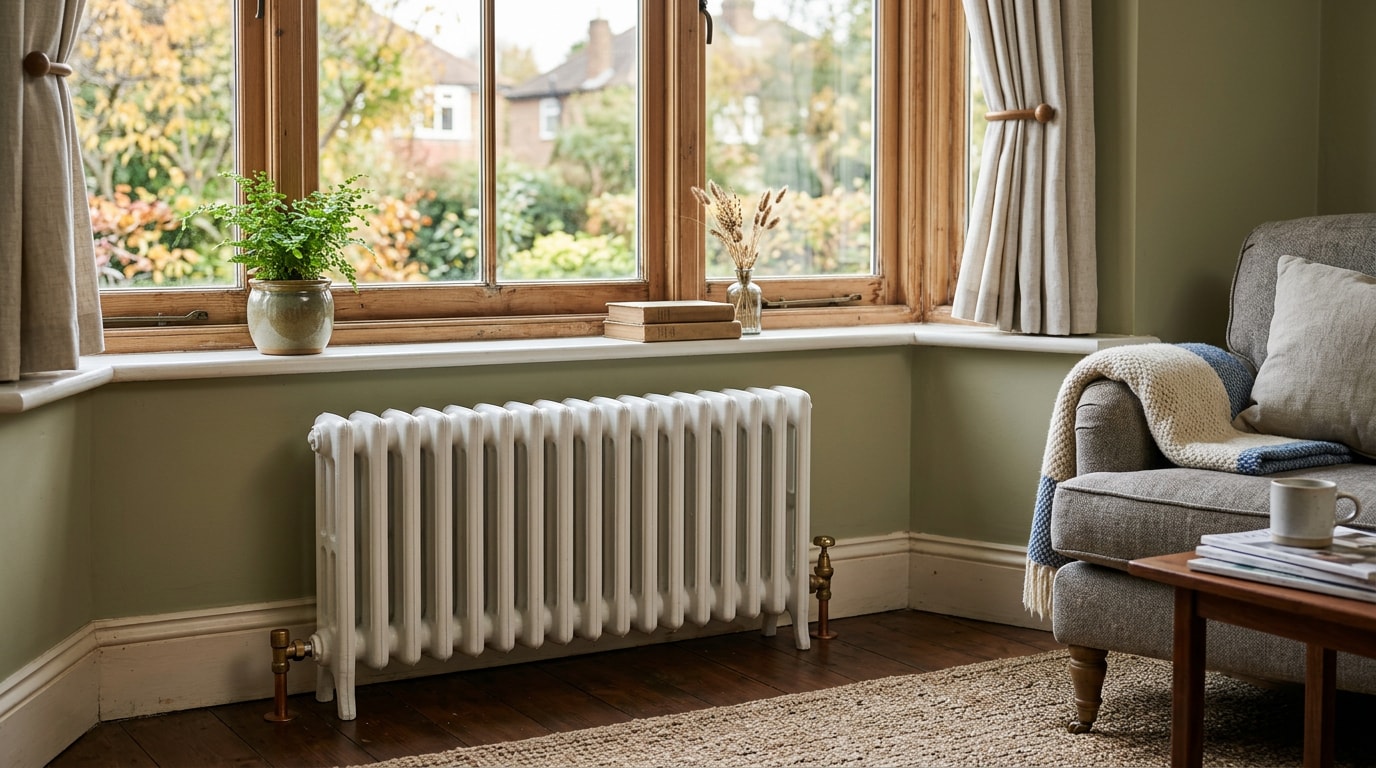
Hot water radiator heating systems are common in many of Navasota's older homes, where cast iron radiators or baseboard units stand in for ductwork and vents. These closed-loop systems heat quietly and evenly, but they run on different principles than the forced-air furnaces found in newer construction. Here's how they work, how to tell them apart from steam radiators, and what upkeep keeps one running through a Brazos Valley winter.
What Is a Hot Water Radiator Heating System?
A hot water radiator heating system, also called hydronic heating, moves heated water through a closed loop. That loop includes a boiler, a circulator pump, piping, and a series of radiators.
There's no ductwork and no blown air involved. Instead, hot water carries heat directly to each room.
These setups show up most often in homes built before central air became standard, though some newer hydronic installs use them for their even heat. Brazos Valley properties can have either a boiler radiator system or a forced-air furnace, depending on the home's age. A qualified HVAC contractor can confirm which type your home has if you're not sure.
How Does Hot Water Radiator Heating Work?
The basic loop is simple once you see it laid out. The boiler heats water. A circulator pump pushes that hot water through supply pipes to each radiator. Cooled water returns through separate return pipes to be reheated.
It's a closed loop, meaning the same water recirculates continuously rather than draining away.
Main System Components
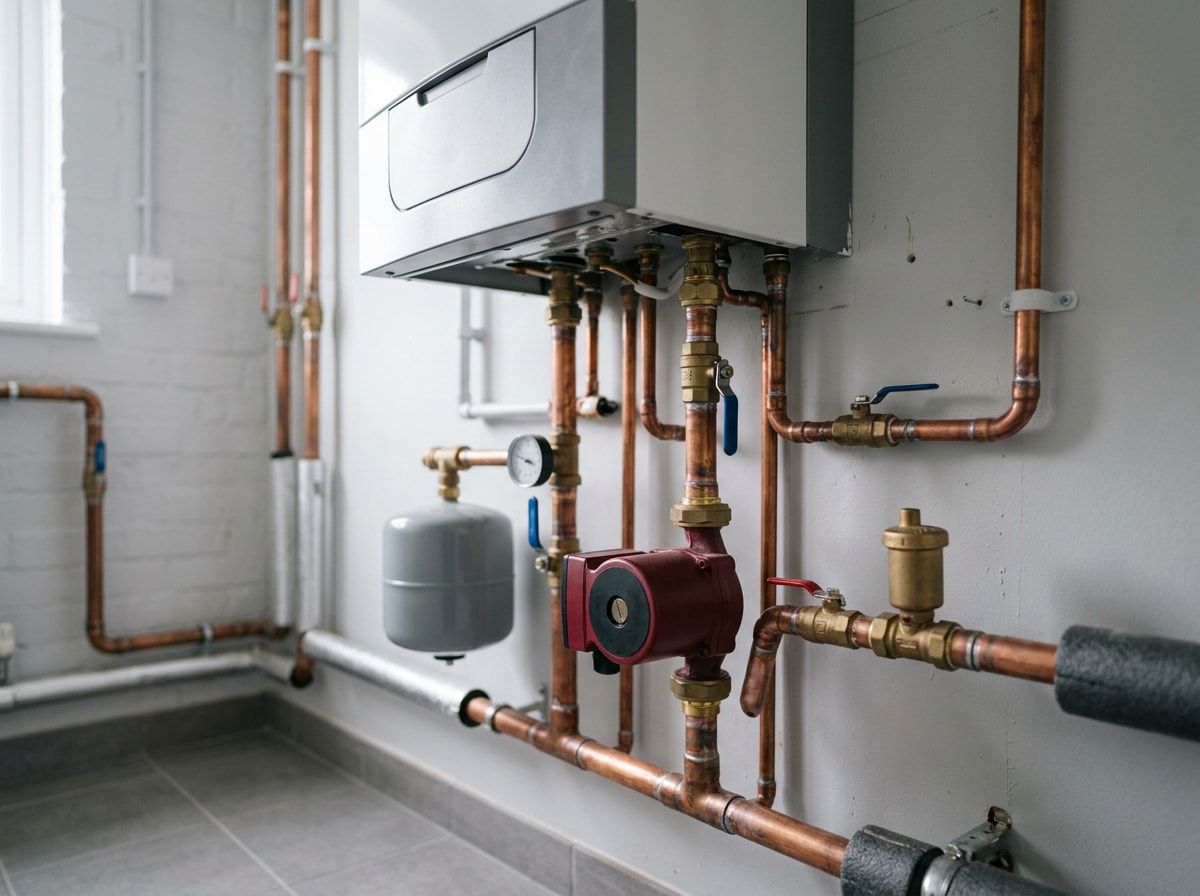
A typical hot water radiator system relies on six main parts working together:
- Boiler – heats the water, often using gas, propane, oil, or electricity
- Circulator pump – keeps water moving through the piping at a steady rate
- Supply and return piping – carries water to and from each radiator
- Radiators – release heat into each room
- Thermostat – tells the system when to run
- Expansion tank – absorbs pressure changes as water heats and cools
How Hot Water Radiators Transfer Heat
Hot water radiators transfer heat two ways. Convection sends warm air rising off the radiator's surface to circulate through the room. Radiation lets the radiator's warm metal directly warm nearby objects and people.
The U.S. Department of Energy draws the same distinction for radiant systems generally: heating delivered through a hot surface, whether a floor, ceiling, or wall panel, warms people and objects directly rather than just the surrounding air , which is the same principle at work in a radiator.
Heat output depends on water temperature, radiator size, and the number of sections. Boiler water typically runs between 160°F and 180°F, though this varies by system design and should be set by a professional. A small two-section radiator in a bedroom might put out a few hundred BTUs per hour, while a larger six- or eight-section unit in a living room can produce well over 1,000 BTUs per hour. That's why radiator sizing matters as much as boiler output when a room feels too cool or too warm.
Hot Water vs. Steam Radiators: How to Tell the Difference
Many homeowners aren't sure whether they have a hot water radiator or a steam radiator, and the distinction matters for safe maintenance.
A hot water radiator usually has two pipes, one for supply and one for return, plus a small bleed valve near the top. A steam radiator typically has just one pipe and a larger air vent instead of a bleed valve.
This isn't just a cosmetic difference. Steam radiators operate under different pressure and temperature conditions, and they should never be bled the way a two-pipe hot water radiator is bled. Doing so on a steam unit can be unsafe. If you're uncertain which type you have, checking for one pipe versus two is usually the fastest way to tell before attempting any DIY maintenance.
Hot Water Radiator Pros and Cons
Every heating system involves trade-offs, and hot water radiators are no exception. They tend to run quietly, distribute even heat across a room, and respond well to thermostat adjustments once the system reaches temperature. On the downside, they heat up more slowly than forced air, don't add humidity the way a steam system does, and need periodic bleeding to clear trapped air.
| Criteria | Hot Water Radiator | Steam Radiator | Forced Air |
|---|---|---|---|
| Noise | Quiet | Can knock/hiss | Moderate (blower) |
| Energy efficiency | High, even heat | Moderate | Varies by duct condition |
| Humidity effect | Minimal | Minimal | Can dry air further |
| Comfort | Even, radiant warmth | Even but harder to control | Can feel drafty |
| Upfront cost | Higher (piping/boiler) | Higher (piping/boiler) | Often lower to install |
Boiler efficiency is worth a closer look if you're comparing a hydronic system to forced air. Boilers certified by ENERGY STAR carry annual fuel utilization efficiency, or AFUE, ratings of 90% or higher for gas models and 87% or higher for oil models , and ENERGY STAR-qualified boilers generally use about 5% less energy than standard models . Forced-air systems typically heat a space faster but can feel less even and may circulate dust through ductwork. If your current system is aging or inconsistent, it may be worth discussing new heater installation options with a technician.
Types of Hot Water Radiators
Radiator style affects how much heat a unit puts out, how much floor space it takes up, and what it costs to install. Cast iron radiators retain heat longest and suit larger rooms, while steel panel radiators heat up faster and work well in smaller or newer spaces. Wall-mounted units are popular where floor space is limited.
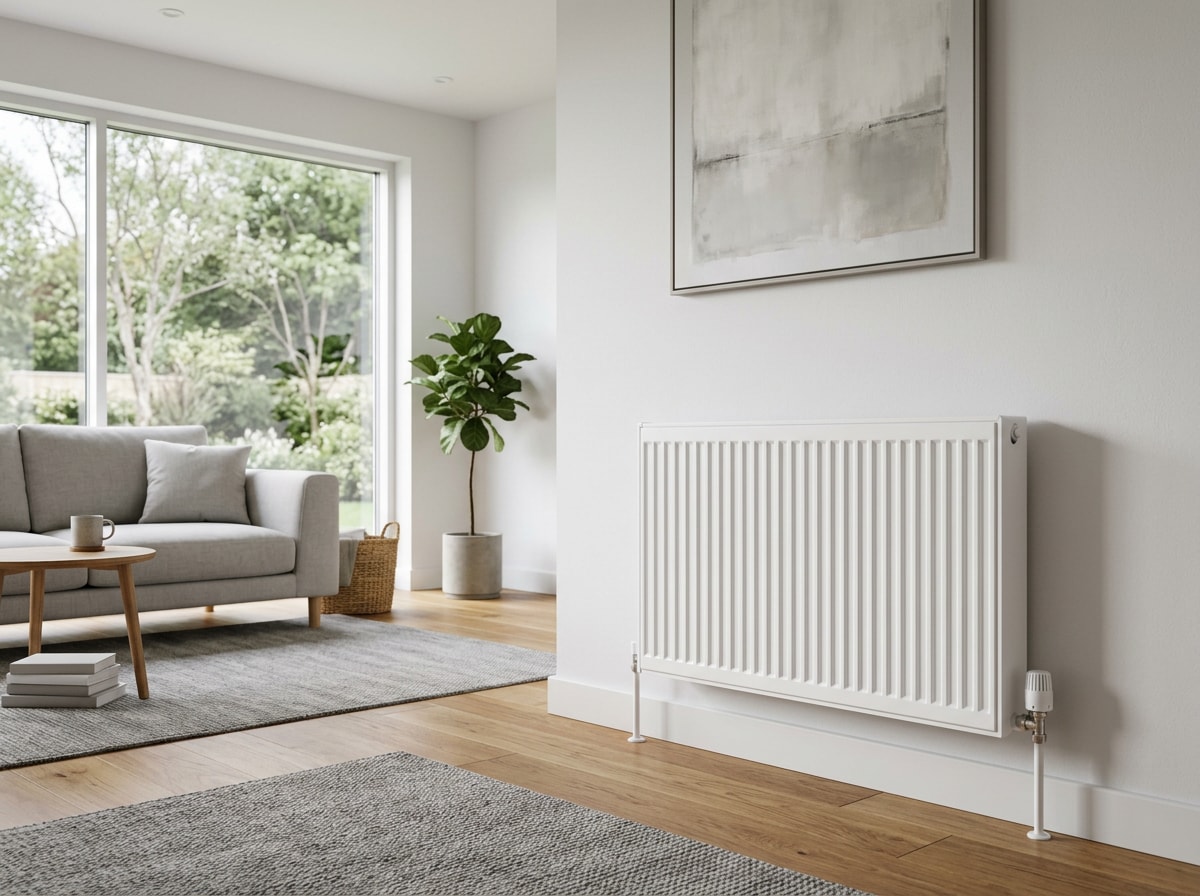
Wall-Mounted Radiators for Hydronic Heating
Wall-mounted radiators are a common choice in hydronic heating setups because they free up floor space while still delivering substantial heat output. They're typically installed under windows or along exterior walls, where they counteract the coolest surfaces in a room. For smaller Navasota homes with limited square footage, a wall-mounted radiator can heat a room as effectively as a bulkier floor unit.
Hot Water Radiator Maintenance in Navasota, TX
Brazos Valley winters are mild more often than not, which means a hot water radiator system can sit idle for long stretches between cold snaps. That's exactly when small problems, like a sticking valve or a slow leak, go unnoticed until a hard freeze puts real demand on the system. A pre-season check catches most of that before it becomes an emergency.
A basic seasonal checklist includes:
- Checking boiler pressure both cold and hot
- Exercising thermostatic valves so they don't seize
- Inspecting visible piping for leaks before the heating season starts
- Bleeding any radiator that feels cold at the top
Radiator balancing is also worth understanding. Rooms closest to the boiler often heat first and hottest, while rooms farther down the loop lag behind. That's typically normal. Persistent cold rooms, steadily dropping boiler pressure, or a system that won't respond to the thermostat are different, and those are signs to call a professional rather than keep troubleshooting on your own. Our boiler heater repair guide covers common signs and typical repair costs in more detail.
Advantage Cooling & Heating offers heater maintenance for homeowners in Navasota who want a seasonal check before cold weather sets in. If you're already seeing one of the warning signs above, schedule service before the next cold snap rather than waiting it out.
How to Bleed a Radiator
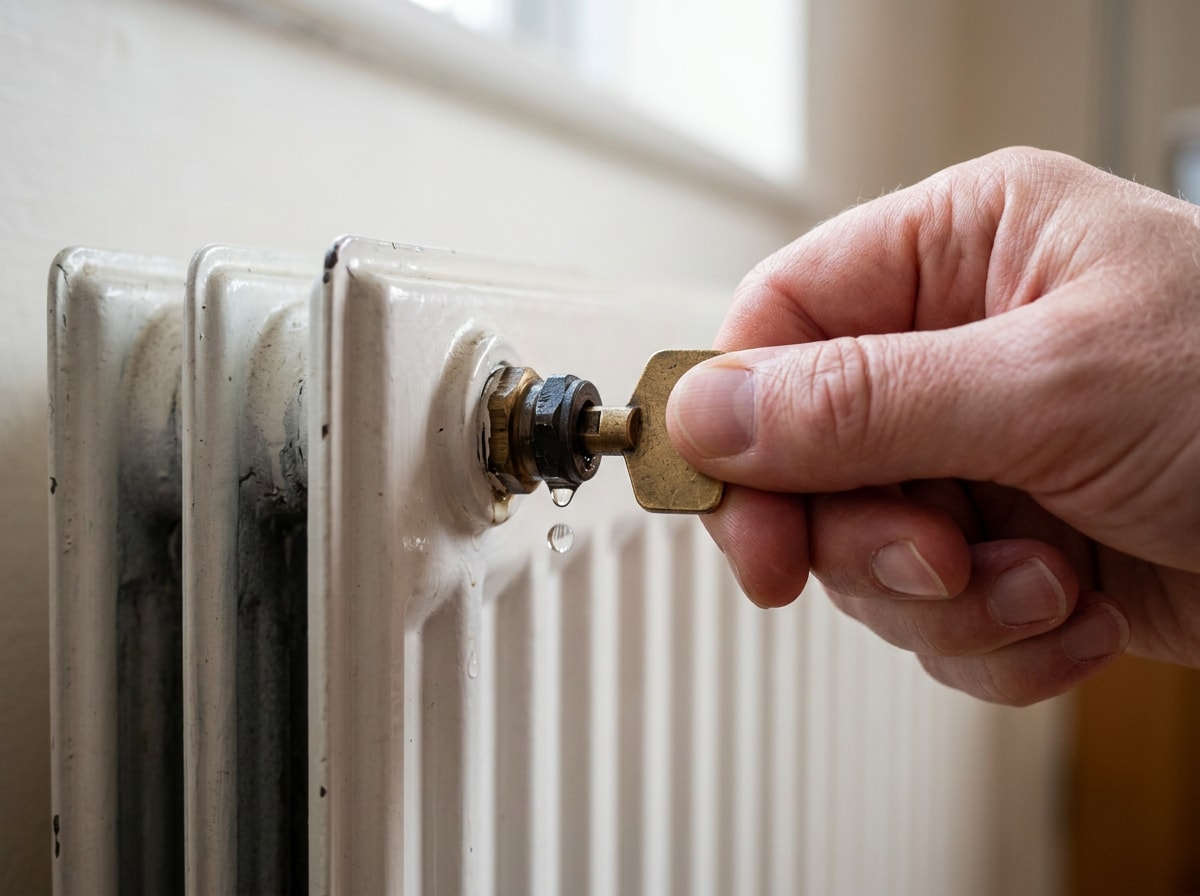
Bleeding a radiator means releasing trapped air so water can fill the unit fully and heat evenly.
Turn off the heating system and let the radiator cool. Open the bleed valve with a radiator key until water flows out steadily instead of hissing air. Close the valve and check that the radiator heats evenly from top to bottom afterward.
This process applies to hot water radiators only, not steam units. Trapped air is a common reason for cold spots or gurgling noises, and removing it restores normal heat transfer.
FAQ
How does a hot water radiator heat a room?
Hot water circulates through the radiator, warming its metal surface. The radiator then releases heat through convection, warming air that rises and circulates, and radiation, warming nearby objects and people directly.
How long do radiator heaters last?
Cast iron radiators can last 25 years or longer, sometimes decades more, while the boiler driving the system typically needs replacement sooner. Water quality and regular maintenance both affect how long components hold up.
Are radiator heaters safe?
Hot water radiators generally run cooler to the touch than steam units but can still get hot enough to cause burns on bare skin. Properly maintained systems with working pressure relief are considered safe for home use.
Can radiator heaters make you sick?
Closed-loop hot water systems don't circulate air through ductwork, so they carry less risk of spreading dust or allergens than forced-air systems. Radiant heating systems, unlike forced-air systems, pose little threat of spreading dust, pollen, and germs , which is one reason some people find hydronic heat more comfortable.
Is a hot water radiator system more expensive to install than forced air?
Usually, yes. Hydronic systems involve a boiler, circulator pump, and dedicated piping to every room, which costs more upfront than running ductwork for forced air. Operating costs can offset that difference over time, especially with a higher-efficiency boiler.
How often should radiators be bled?
Most homeowners bleed radiators once at the start of each heating season, or anytime a radiator feels cold at the top or makes gurgling sounds. If bleeding doesn't solve the problem, a heater repair visit can identify the underlying issue.