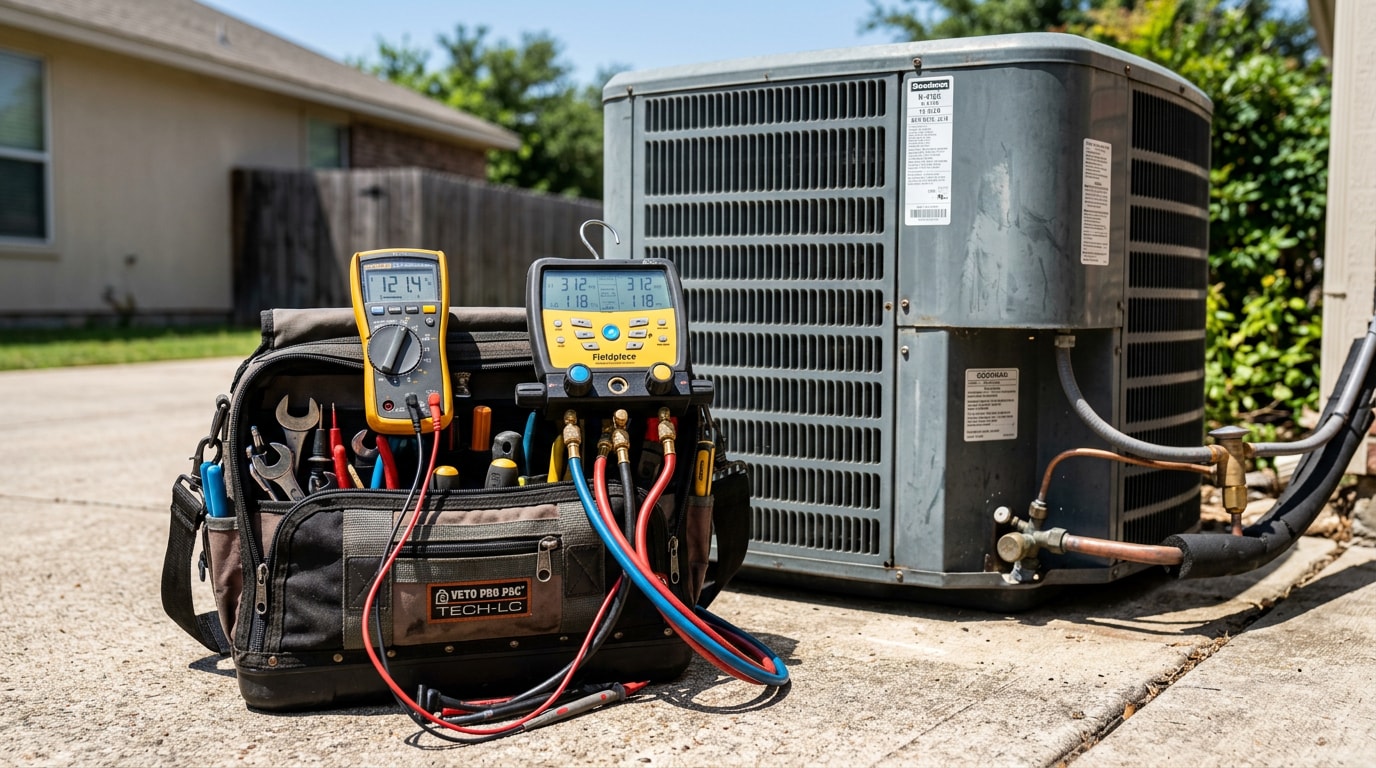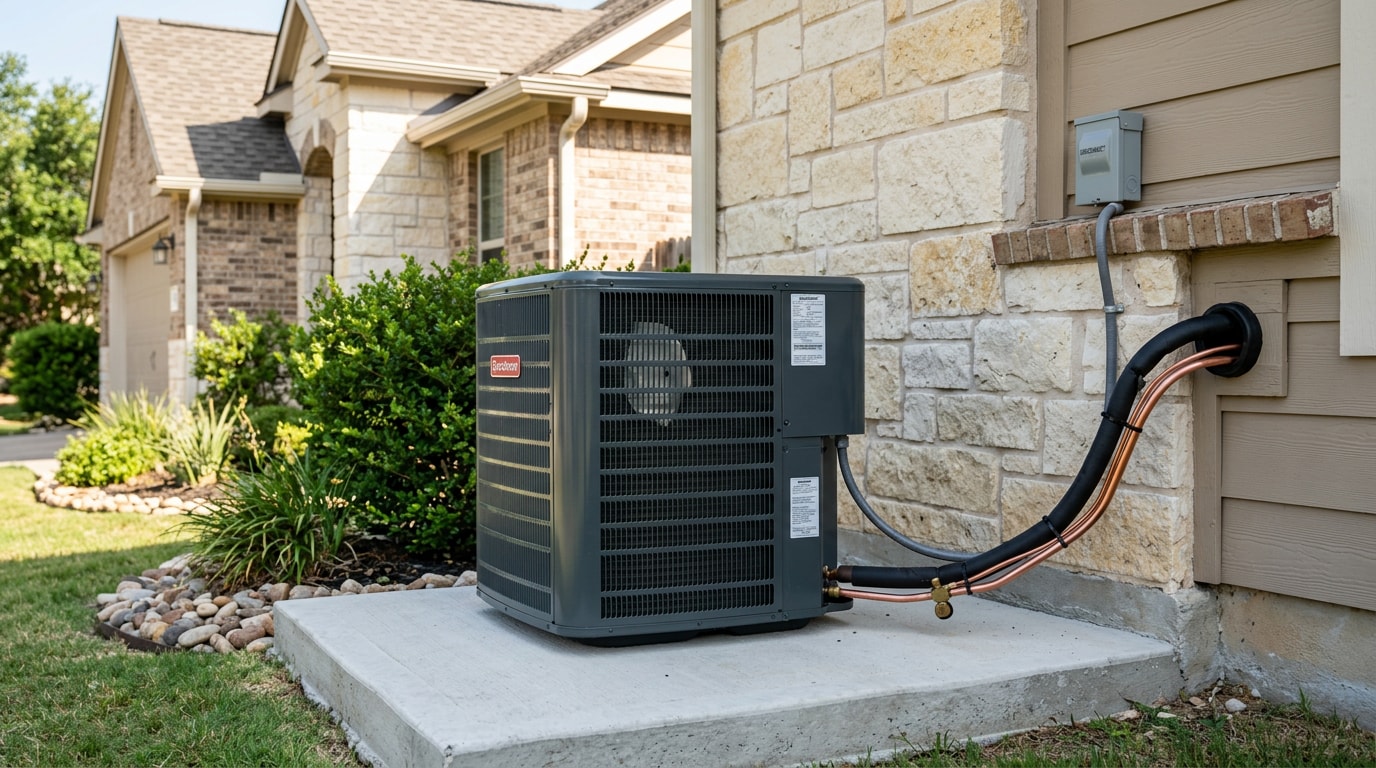
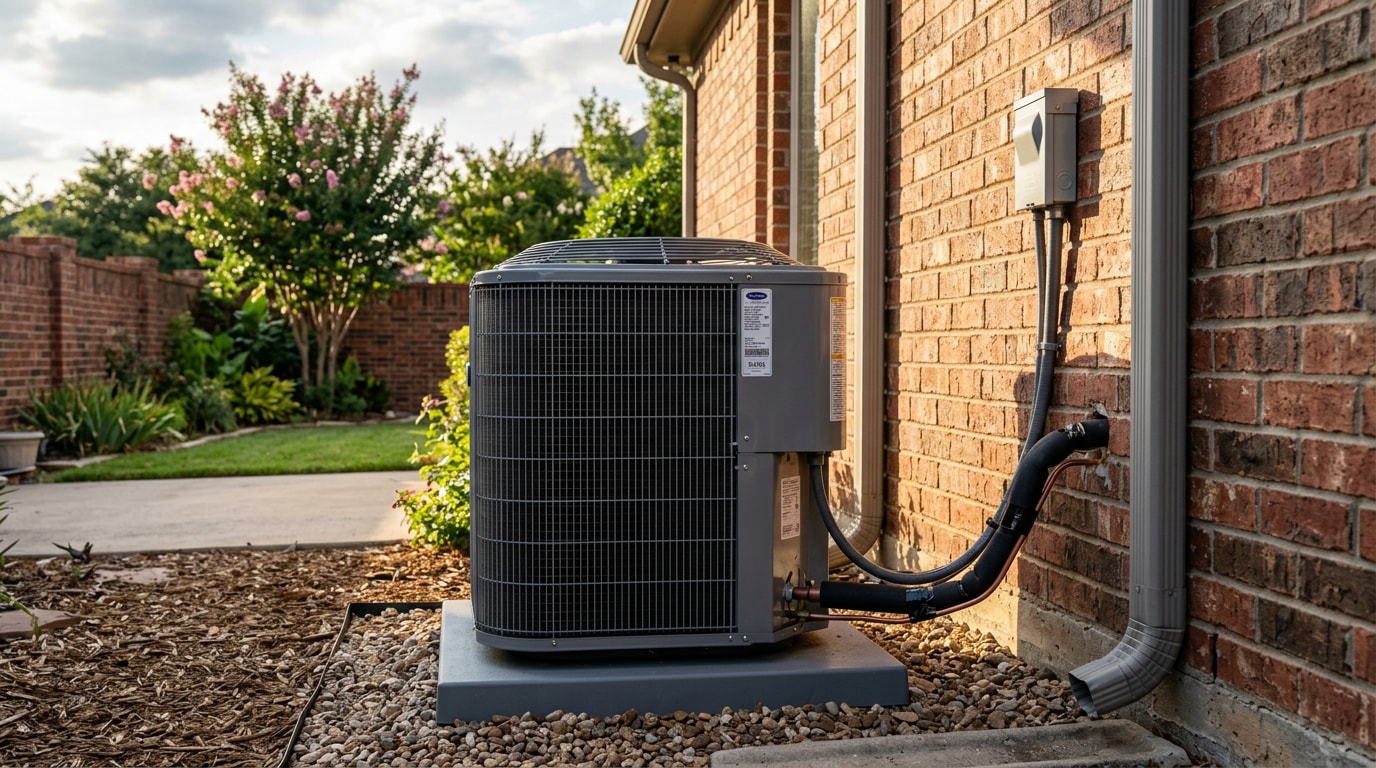
AC troubleshooting in College Station, TX comes down to four checks almost every time: filter, thermostat, refrigerant, and the outdoor coil. Work through them in that order and most summer breakdowns reveal their cause in under 15 minutes. If the system still won't cool after that, the problem lives deeper in the system, and it's time to call a technician.
Common AC Problems in College Station, TX
If you've lived in the Brazos Valley through even one summer, you already know why cooling systems take a beating here. Heat and humidity push the equipment hard, and eventually something gives.
The usual suspects include:
- An air conditioner that won't turn on at all
- Weak or uneven airflow
- Grinding, squealing, or banging noises
- Water pooling near the indoor unit
- Musty odors
- Short-cycling (the system turning on and off rapidly)
- A frozen evaporator coil
Most of these problems trace back to one of four root causes, and this guide walks through them in the order a technician would actually check. On calls across College Station and Bryan, a dirty filter or a tripped condensate float switch turns out to be the culprit far more often than a failed compressor. For deeper mechanical issues, our AC repair team can step in once you've worked through the basics below.
How to Troubleshoot Common AC Problems: A Step-by-Step Checklist
Four causes account for the vast majority of cooling complaints in this climate. Start with the cheapest, simplest fix and work toward the issues that call for a professional.
1. Dirty or Clogged Air Filter
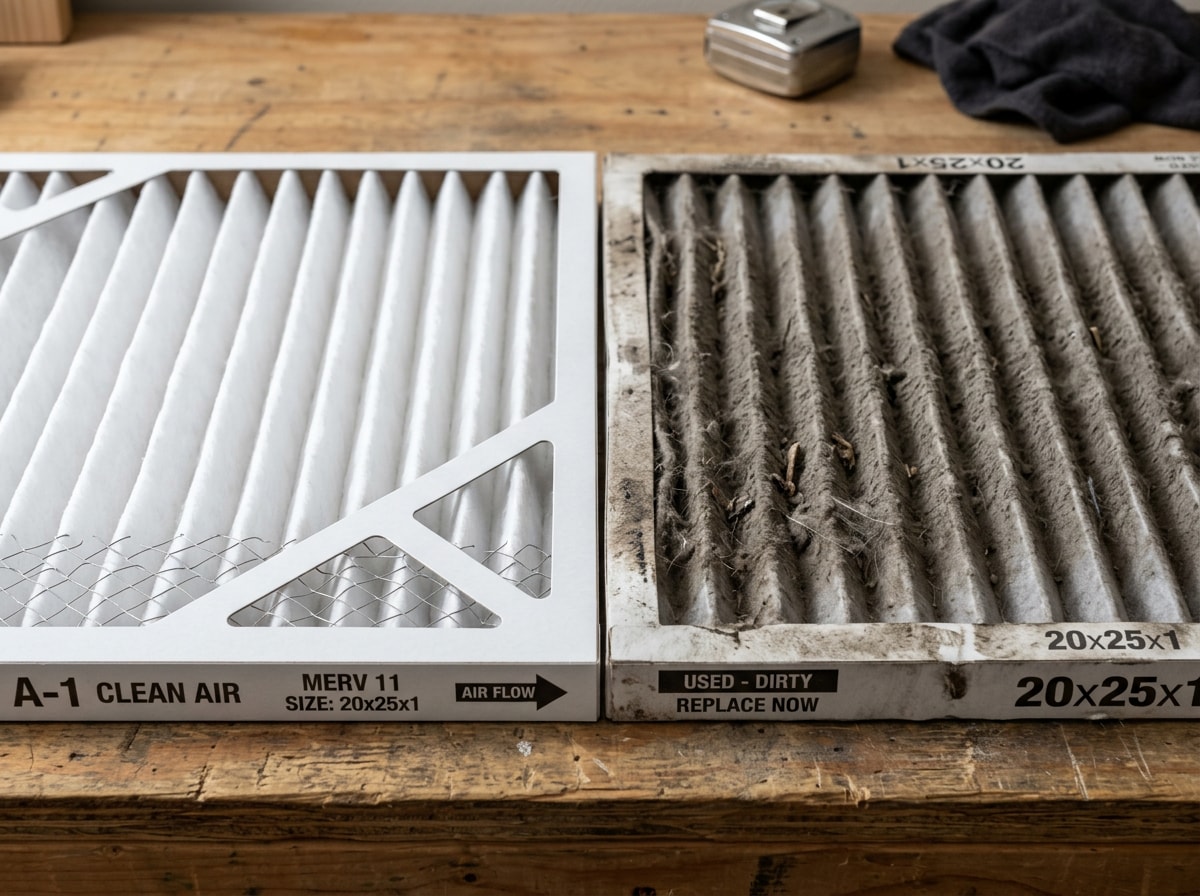
A dirty air filter is the single most common reason an AC runs but doesn't cool. It chokes off airflow across the evaporator coil and can cause the coil itself to freeze. When the restriction gets bad enough, the system works harder while blowing less cold air into the house.
In College Station's pollen- and humidity-heavy climate, check your filter monthly. Check your filter every month, especially during heavy use months, and change it if it looks dirty after a month, or at a minimum every three months. It's the cheapest fix on this list, and it's worth ruling out first.
2. Thermostat Problems
Before assuming anything is mechanically wrong, check the thermostat settings. Confirm it's set to "cool," not "heat" or "off," and that the setpoint is below the current room temperature.
Also check the fan setting. "Auto" cools more efficiently, while "on" runs the blower constantly, which can make it seem like the system isn't cooling. If the AC won't turn on at all, dead batteries in a non-hardwired thermostat are a surprisingly frequent culprit. This is the fastest free fix available, so rule it out before anything else.
3. Low Refrigerant or a Refrigerant Leak
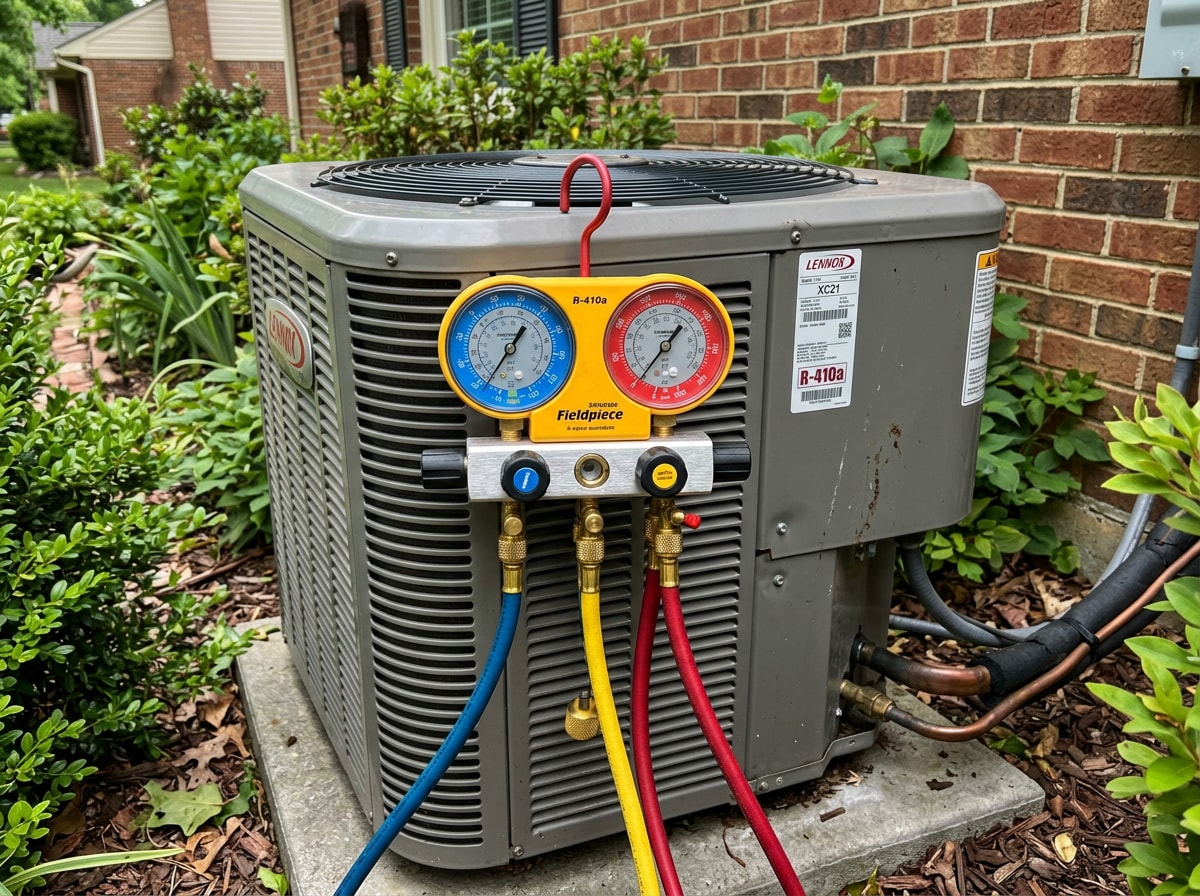
Ice on the refrigerant lines, warm air from the vents despite the system running, and a hissing sound near the indoor unit all point to low refrigerant from a leak. Refrigerant, including the R-410A used in most modern residential systems, is not something homeowners should handle themselves.
| DIY-Safe Checks | Technician-Only Work |
|---|---|
| Visual inspection for ice or frost | Diagnosing and sealing refrigerant leaks |
| Listening for unusual hissing near the air handler | Recharging refrigerant to correct pressure |
| Noting when warm air started | Accessing sealed refrigerant lines or the compressor |
Refrigerant handling is federally regulated. EPA regulations under Section 608 of the Clean Air Act require that technicians who maintain, service, repair, or dispose of equipment that could release ozone depleting refrigerants into the atmosphere must be certified. That's why this repair always goes to a certified HVAC technician.
4. Dirty Outdoor Condenser Coil
Grass clippings, cottonwood fluff, pollen, and general yard debris build up on the outdoor unit's condenser coil and block the heat transfer the system needs to cool your home. Over a Texas summer, this buildup happens faster than most homeowners expect.
You can safely inspect the unit yourself:
- Turn off power at the disconnect.
- Clear away leaves and debris by hand.
- Gently rinse the coil fins with a garden hose from the inside out.
- Avoid pressure washers, which can bend the fins and make airflow worse.
Routine condenser cleaning a couple of times a season goes a long way toward preventing this problem. If you'd rather have it handled on a schedule, our AC maintenance plans cover this along with the rest of the system.
Other AC Troubleshooting Red Flags: Noises, Smells, and Breaker Trips
Unusual Noises or Smells
Grinding or squealing usually points to a worn motor bearing or belt. Banging often means a loose or broken internal part. Any AC making noise like this warrants a shutoff and a closer look before you run the system further.
Burning smells or a persistent musty odor are different; these are safety signals, not nuisances. Shut the system off immediately and treat a burning smell as a sign of a potential electrical or mechanical failure that needs professional attention.
Tripped Breakers
If the outdoor unit trips the breaker repeatedly, stop resetting it. A breaker that keeps tripping usually means a failing capacitor, a seizing compressor, or a short somewhere in the wiring, and repeated resets can push a failing part the rest of the way to failure. A home's electrical panel and wiring carry real hazards, which is why consumer safety guidance consistently points homeowners toward a qualified technician for anything beyond a single, one-time reset.
Should I Try to Fix My AC Myself?
Some AC troubleshooting is genuinely safe for homeowners, and some isn't.
DIY-safe tasks:
- Changing the air filter
- Adjusting the thermostat
- Clearing debris from the outdoor unit
- Checking (not repeatedly resetting) the breaker panel
Anything involving refrigerant, electrical wiring, or the pressurized components inside the system crosses into licensed, insured HVAC work. These systems carry real electrical and pressure hazards, and opening sealed components without training risks injury along with further damage to the unit. CPSC is a federal agency that protects the public against unreasonable risks of injuries and deaths associated with consumer products , and its home safety guidance reflects the same line most technicians draw: once a problem goes beyond settings and surface cleaning, it's time to call a professional.
How Much Does AC Repair Cost in Bryan-College Station?
AC repair cost varies widely depending on what's wrong. A simple capacitor replacement typically falls in a modest range, often well under a few hundred dollars, while compressor or refrigerant-related repairs can run considerably higher.
Pricing also depends on system age, refrigerant type, and whether parts are readily available locally. A diagnostic visit is usually the most reliable way to get an accurate number for your specific system rather than guessing from general ranges. A seasonal tune-up before peak summer can also catch small issues before they turn into expensive repairs.
When to Call for Professional AC Repair in College Station
Once you've worked through the DIY checks and the problem persists, the issue lives deeper in the system. Persistent warm air, repeated short-cycling, ice after a filter change, or any burning smell all mean it's time for a proper diagnosis.
A local HVAC technician brings the gauges, training, and certification needed to safely diagnose refrigerant, electrical, and compressor issues that go beyond what a homeowner can check. We've covered a closely related scenario in our guide to AC on but not cooling in College Station if that matches what you're seeing.
Advantage Cooling & Heating has served the Brazos Valley since 1998, and our crews run this same four-point checklist on nearly every no-cool call we take across College Station, Bryan, and the surrounding area. If your system is still acting up after you've gone through it, schedule service and we'll send a technician out to diagnose it properly.
We serve homes throughout the College Station service area, and you can see examples of our recent work on our homepage.
FAQ
Why is my AC running but not cooling?
It's usually a dirty filter restricting airflow, a thermostat set incorrectly, low refrigerant from a leak, or a dirty condenser coil blocking heat transfer outside. Checking these four areas in order usually reveals the cause.
What should I check first if my AC is not cooling?
Check the air filter first, then thermostat settings, then the outdoor condenser unit for debris, and finally the electrical breaker. This order moves from the simplest, cheapest fixes to the ones that may need a technician.
Can a dirty filter cause my AC to stop cooling?
Yes. A dirty filter restricts airflow across the evaporator coil, which can cause it to freeze over and stop cooling the home until it thaws and the filter is replaced. Regular filter checks prevent this.
Why is my AC blowing warm air but the outdoor unit is running?
This combination typically points to a refrigerant problem, a failing compressor, or a reversing valve issue rather than a simple fix. It usually means it's time to call a licensed technician.
Why does my AC keep tripping the breaker?
A breaker that trips repeatedly usually means a failing capacitor, a seizing compressor, or a short in the wiring. Stop resetting it and have a technician check the electrical components before running the system again.
How long should AC troubleshooting take before I call a professional?
Run through the filter, thermostat, and outdoor unit checks in about 15 minutes. If the system still isn't cooling after that, the cause is likely refrigerant, electrical, or compressor related, and it's time to call for repair.