If your AC on but not cooling your College Station home has you standing in front of a vent waiting for relief that never comes, you're not imagining it. The fix usually isn't a mystery, it's almost always one of a handful of repeatable causes, from a $0 thermostat check to a repair that needs a licensed technician's tools and training.
Why Is My AC Running But Not Cooling?
A homeowner dealing with an air conditioner that won't cool through a College Station summer usually notices more than one symptom at once. Warm or lukewarm air from the vents, weak airflow, a system that never shuts off, and a power bill that's crept up for no obvious reason tend to show up together.
Sometimes only one symptom appears first. Other times they all hit in the same week, usually during the hottest stretch of July or August.
Most causes fall into one of two buckets: things you can check yourself in five minutes, or things that genuinely need a professional. We'll walk through both below, along with what a repair visit typically looks like in this area. If you want a technician to look at it today, our College Station AC repair team handles this exact diagnostic work year-round.
Common Causes of AC Not Cooling in College Station Homes
Central Texas humidity and long summer run-times put extra strain on local systems. That's why a few specific problems show up here more often, and more severely, than in drier climates.
Dirty Air Filter
A dirty air filter is the single most common reason an AC runs constantly without cooling the house. It chokes off airflow across the evaporator coil, which stops the system from absorbing heat properly. Checking it costs nothing and takes less than five minutes.
A clogged filter forces the blower to work harder while delivering less cooled air into your rooms. Left unchecked, that strain can cascade into the frozen coil problem covered below. A dirty air filter makes your heating and cooling system work harder, which can increase energy costs and damage the equipment over time, so it's worth checking it once a month , especially during peak cooling season.
Refrigerant Leaks (Low Refrigerant)
Refrigerant doesn't get "used up" the way fuel does. If your system is low, refrigerant is almost always leaking out somewhere in the line set or coil. Simply recharging it without finding the leak is a short-term fix that fails again within months.
A realistic diagnostic-and-repair visit for a College Station home looks like this:
- A technician connects gauges to check pressure readings
- An electronic leak detector or UV dye pinpoints the leak location
- The affected line or fitting gets repaired or sealed
- The system is pulled down to a vacuum to remove air and moisture
- The system is recharged to the manufacturer's specified level
This process is federally regulated, not just best practice. EPA regulations under Section 608 of the Clean Air Act require that technicians who maintain, service, repair, or dispose of equipment that could release refrigerants into the atmosphere be certified . That rule exists because these chemicals are environmentally hazardous if vented improperly.
Frozen Evaporator Coil
Ice forming on the indoor coil or refrigerant lines means the coil can no longer absorb heat from your home's air. That's why a frozen system often blows weak, warm, or no air at all, despite running nonstop.
If you spot ice, turn the system off and let it thaw completely. This can take several hours. Call a technician afterward to find out what caused the freeze in the first place, restarting it without fixing the root cause usually just refreezes it.
Capacitor Failure
A capacitor stores the electrical charge that kicks the compressor and fan motor into motion. When it fails, you'll often hear a humming sound but the unit won't start, or it cycles on and off erratically. Texas heat shortens capacitor lifespan noticeably compared to milder climates, making this a frequent summer failure point for local homeowners.
Clogged Condensate Drain Lines
College Station's humidity means AC systems pull a lot of moisture from the air, and that condensate has to drain somewhere. When the drain line clogs, built-up water trips a safety switch that shuts the whole system down, sometimes with a visible water leak near the indoor unit.
What Does AC Repair Typically Cost in College Station?
HVAC repair pricing varies by system age, the specific part involved, and how long diagnosis takes. Any phone estimate should be treated as a starting point, not a final number. In general terms, repairs tend to fall into three tiers:
| Repair Tier | Typical Issues | What Drives the Cost |
|---|---|---|
| Minor | Capacitor replacement, basic drain line clear | A single part plus one service call |
| Moderate | Refrigerant leak repair, electrical component replacement | Diagnostic time plus parts and labor |
| Major | Compressor replacement, extensive coil damage | Labor-intensive repair that can approach the cost of a system upgrade |
If your system is already older and repair costs are creeping toward the top tier, it's worth asking a technician for a side-by-side comparison with new AC installation before committing to another repair.
What Happens During an AC Diagnostic Visit?
Knowing the general flow helps you know what to expect before a technician ever arrives.
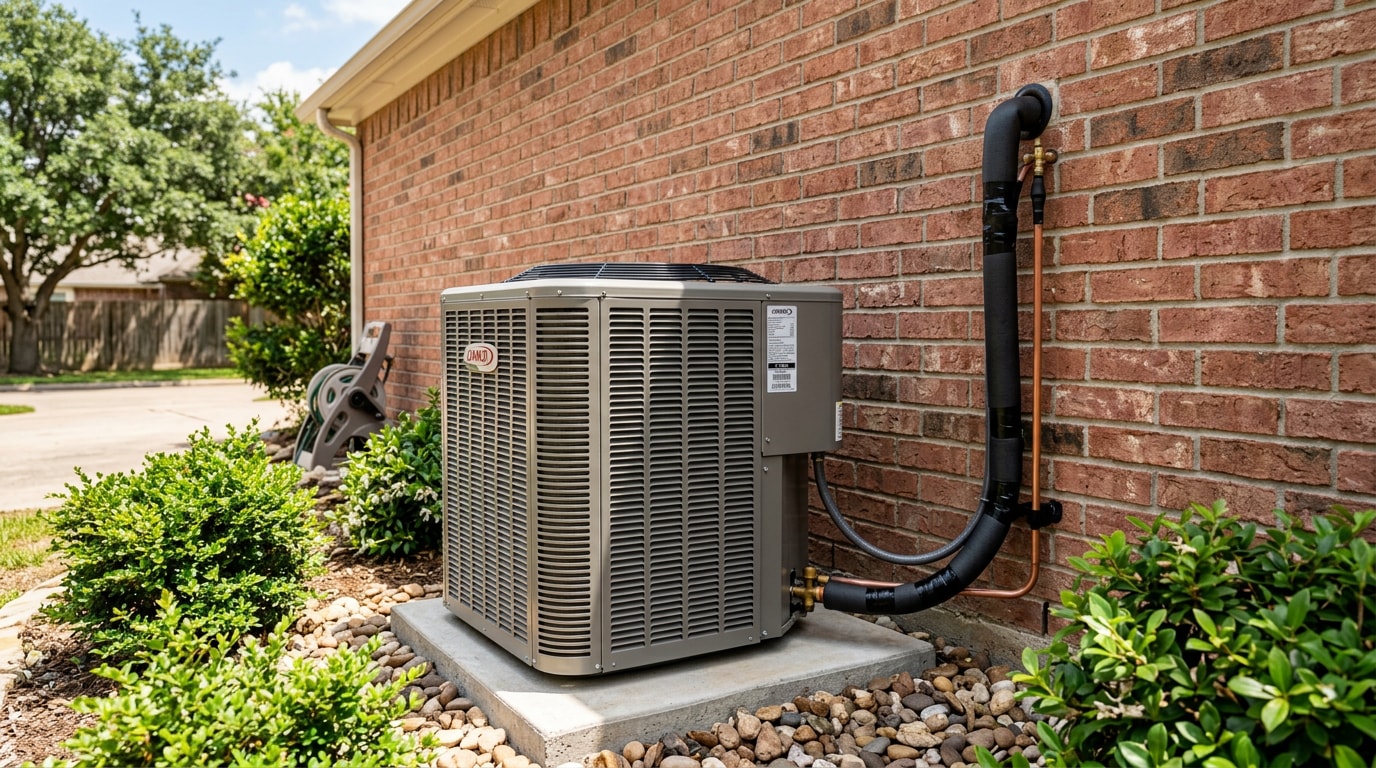
A technician typically starts outside, checking the condenser unit for bent fins, debris buildup, and fan blade condition. Restricted airflow around the outdoor unit can mimic several indoor symptoms, so this step matters more than homeowners usually assume.
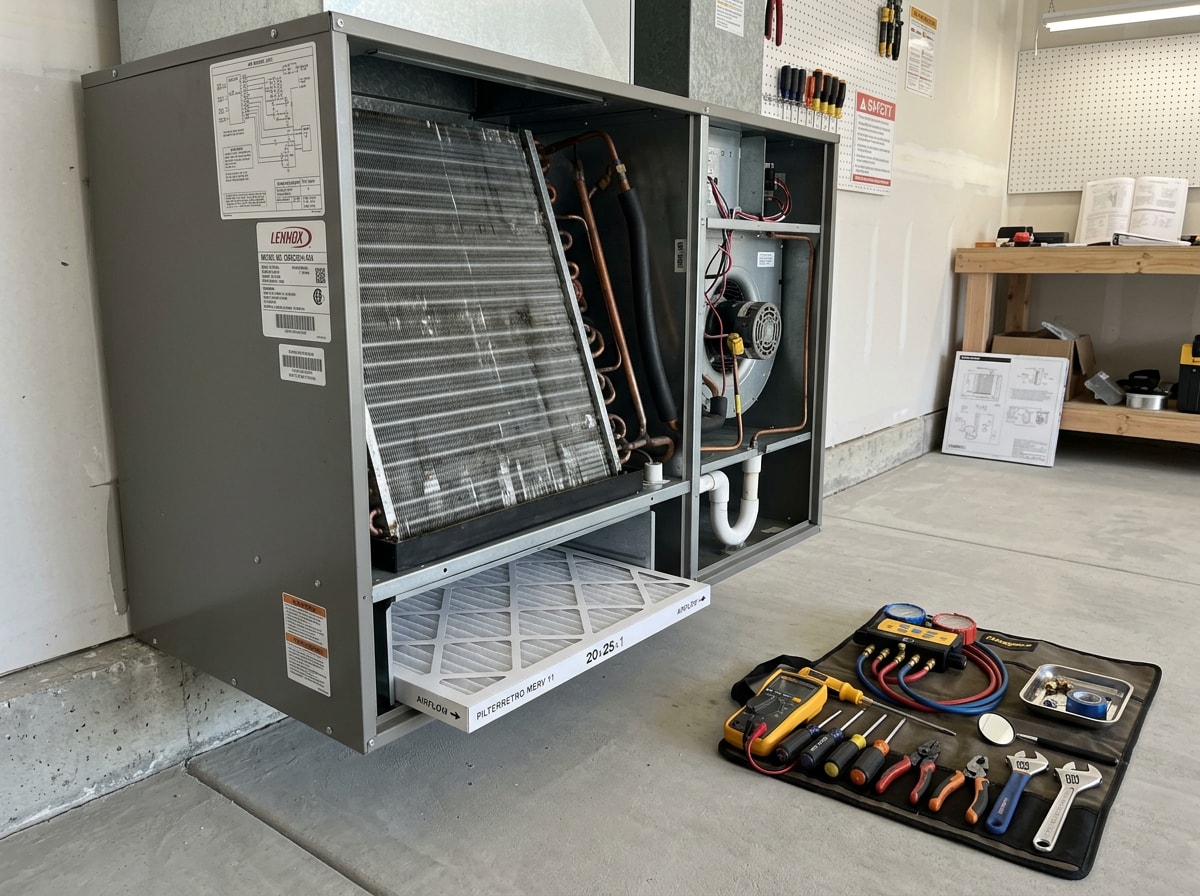
Indoors, they'll inspect the air handler, check the filter, and look for visible signs of leaks or frost. This hands-on inspection usually happens before any gauges or electrical testing begins.
Should I Try to Fix My AC Myself?
Some troubleshooting is genuinely safe to attempt before calling anyone:
- Check the air filter and replace it if it's dirty
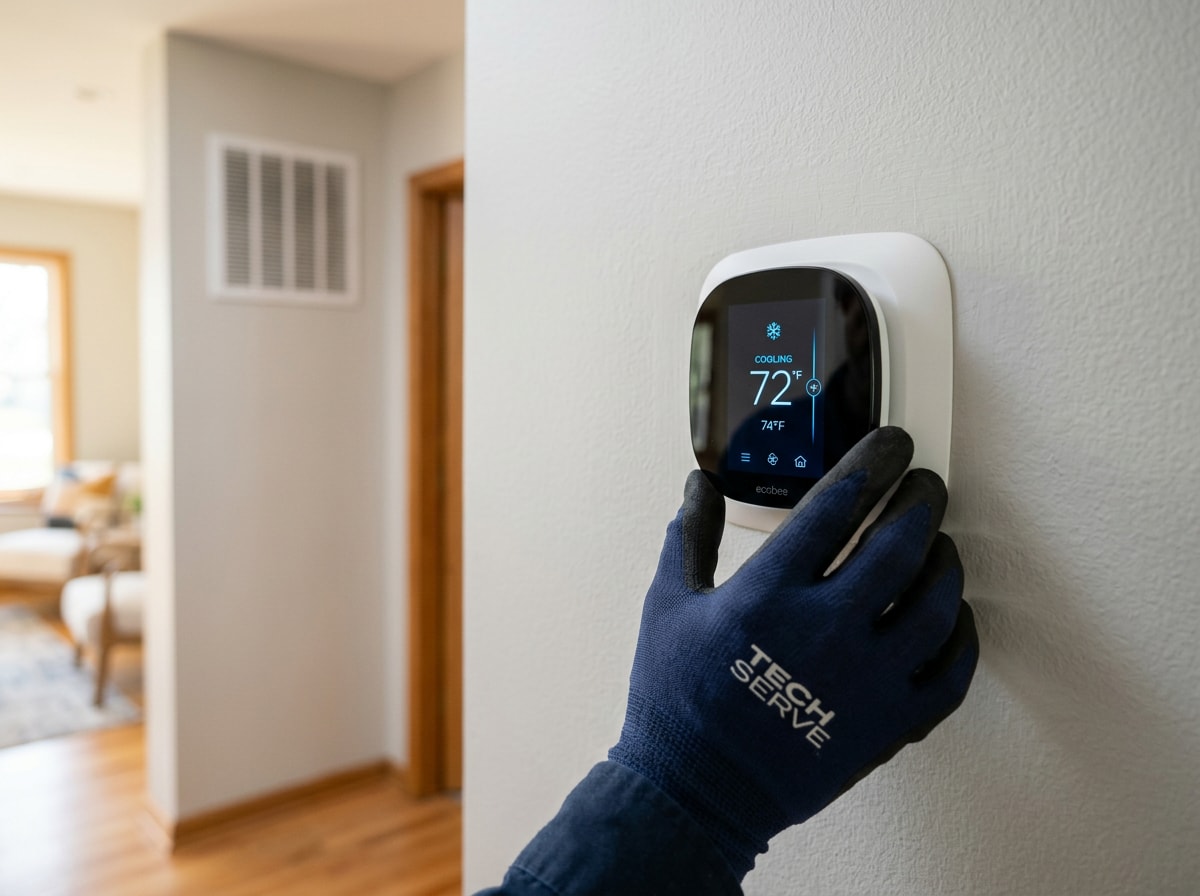
- Confirm the thermostat is set to "cool" and the target temperature is actually lower than the room
- Check the breaker panel for a tripped switch
- Clear leaves or debris crowding the outdoor unit
Beyond that, it's time to call a technician. Refrigerant work, electrical repairs, and anything involving the compressor require licensed expertise and specialized tools. Attempting them without training risks both your safety and further damage to the system. Routine upkeep between repairs matters too, our AC maintenance plan catches many of these issues before they turn into a no-cooling emergency. A seasonal HVAC tune-up scheduled before summer is usually the cheapest insurance against a July breakdown.
Preventive Measures to Avoid Repairs
Catching problems early, ideally before peak summer heat arrives, saves money and helps you avoid an emergency breakdown on the hottest day of the year.
Watch for these warning signs before the system quits entirely:
- Unusual noises like squealing, grinding, or repeated clicking
- Longer run times than usual
- Uneven cooling between rooms
- Rising energy bills without a clear explanation
Homeowners looking at lower long-term cooling costs sometimes ask about alternatives alongside standard repairs. If that's you, our guide to solar air conditioning options in Bryan, TX breaks down the 2026 costs and incentives for the area.
Local AC Repair Experience in College Station, Bryan & Brenham
Housing stock varies across the Brazos Valley, and that affects cooling performance directly. Older homes near Northgate often have aging ductwork that leaks conditioned air into attics, while newer multi-story homes in Greens Prairie can see uneven cooling between floors because of longer duct runs. We see this pattern repeat every cooling season across service calls in College Station, Bryan, and Brenham.
Local climate makes the strain worse. College Station's record high temperature of 112°F was set on September 4, 2000 , and summers here regularly combine extended heat with heavy humidity. That combination forces AC systems to run longer and harder than the same equipment would need to in a drier region, which is a major reason local systems fail faster than their rated lifespan would suggest.
For service details specific to your neighborhood, visit our College Station service area page, or schedule service directly if your system is already struggling.
FAQ
Should I turn off my AC if it's not cooling?
Yes. Running a system that isn't cooling properly can damage the compressor over time since it's working harder without achieving the intended result. Turn it off and address the underlying cause first.
Why is my AC blowing warm air but the outdoor unit is running?
This combination usually points to low refrigerant, a stuck reversing valve on heat pump systems, a failed compressor, or a dirty indoor coil blocking proper heat exchange. A technician can narrow it down quickly with pressure readings.
Can a dirty filter cause my AC to stop cooling?
Yes. A dirty filter can restrict airflow enough to freeze the evaporator coil, which then shuts cooling down entirely. Checking and replacing the filter is the smartest first troubleshooting step before calling for AC repair service.
How much does AC repair cost in College Station, TX?
It depends on the tier of repair. Minor fixes like a capacitor swap cost the least, moderate repairs like refrigerant leak fixes cost more due to diagnostic time, and major repairs like compressor replacement sit at the top of the range. A technician can give you an exact number after inspecting the system.
How long can I run my AC if it's not cooling?
Not long. A system straining to cool without success is working harder than designed, which accelerates wear on the compressor. Shut it off and get it inspected rather than letting it run for hours or days hoping it resolves on its own.
How often should I change my air filter in College Station's climate?
Check it monthly and replace it at least every three months, more often during peak summer when the system runs constantly. Homes with pets or heavy dust may need monthly replacement.
Get Your Cooling Back On Track
A no-cooling system rarely fixes itself, and in a Brazos Valley summer, waiting usually makes the repair bigger and the house less comfortable in the meantime. Start with the filter and thermostat checks above. If the problem persists, schedule service with a licensed local technician who can diagnose the actual cause instead of guessing. You can also browse recent completed projects or visit the homepage to see the full range of HVAC services available across the Brazos Valley.
About the Author
This guide was reviewed by the licensed service team at Advantage Cooling, a TACLB-licensed HVAC contractor serving College Station, Bryan, Brenham, Navasota, Hearne, and Caldwell, TX. Our technicians complete AC diagnostic and repair calls across the Brazos Valley year-round and see the same handful of no-cooling causes repeat every summer. Questions about a specific system? Contact us to schedule a diagnostic visit.