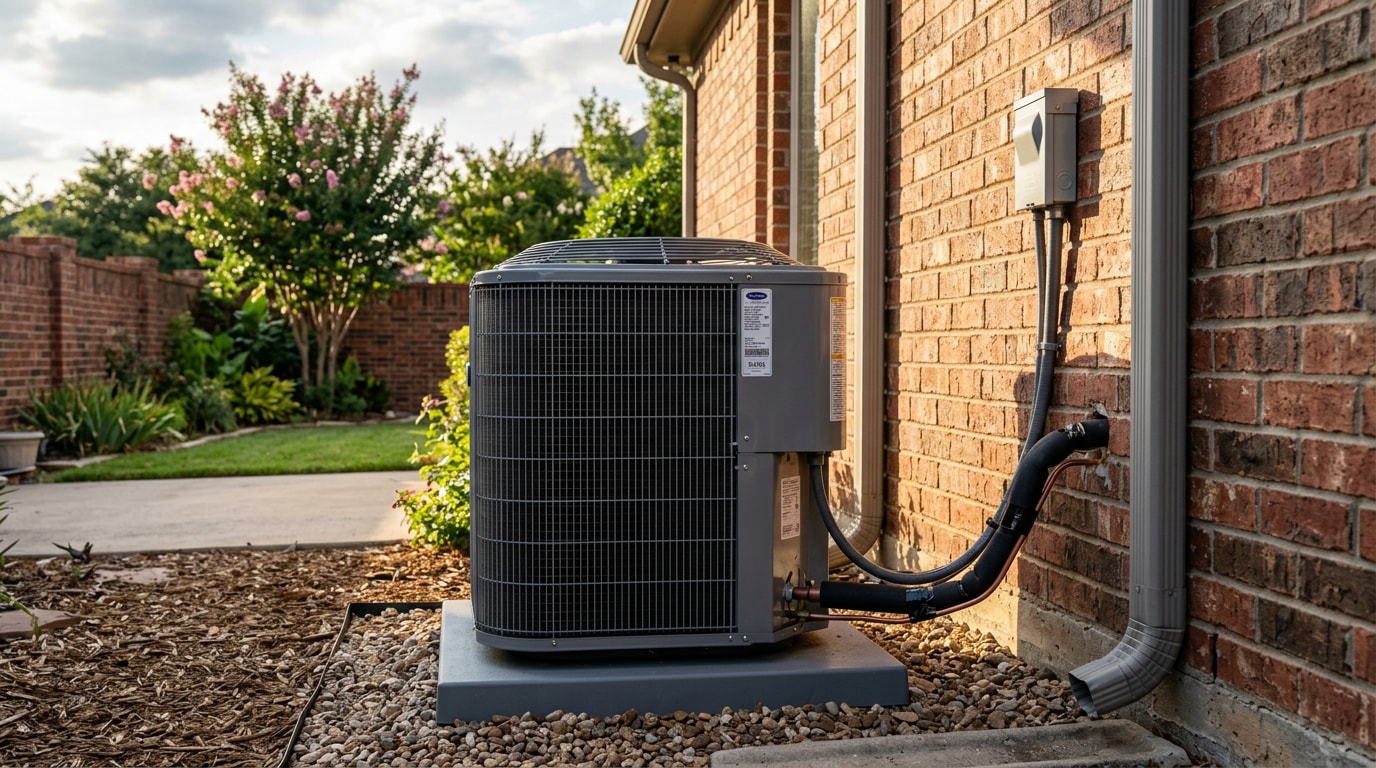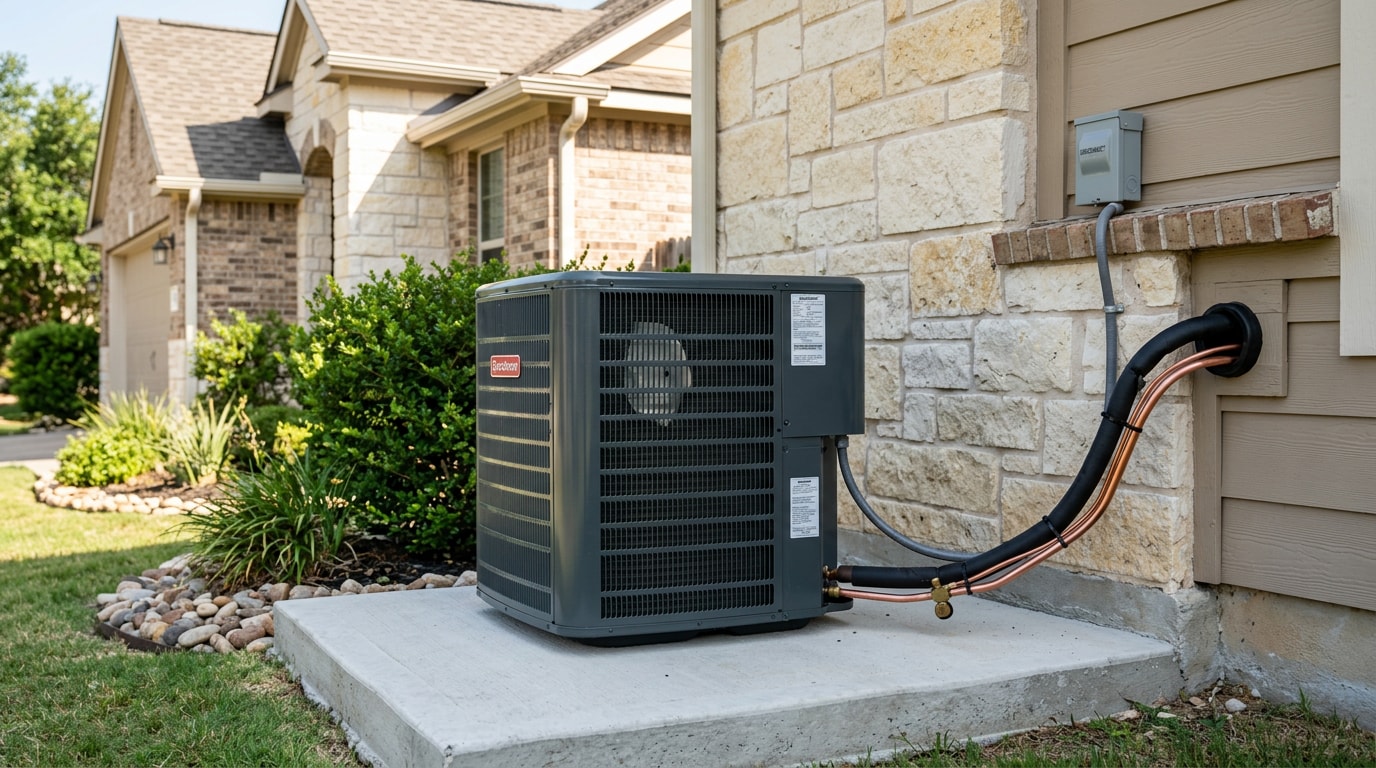
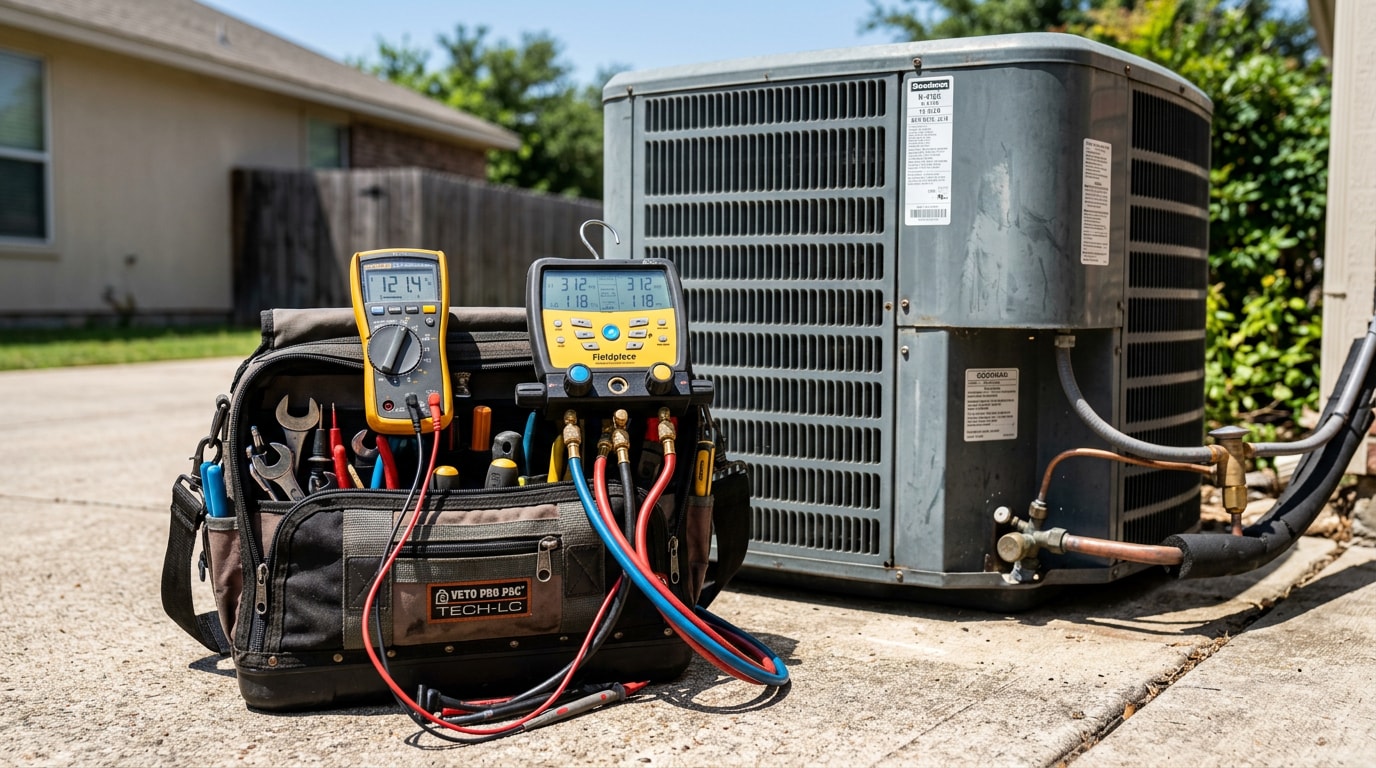
An AC diagnostic in Hearne, TX is the structured inspection a technician runs to pinpoint exactly why your air conditioner stopped cooling, before any repair starts. Most homeowners don't actually want a repair quote first. They want to know what's being checked, what it costs, and how long it takes. This guide answers all three, straight through.
What Happens During an AC Diagnostic Visit in Hearne, TX
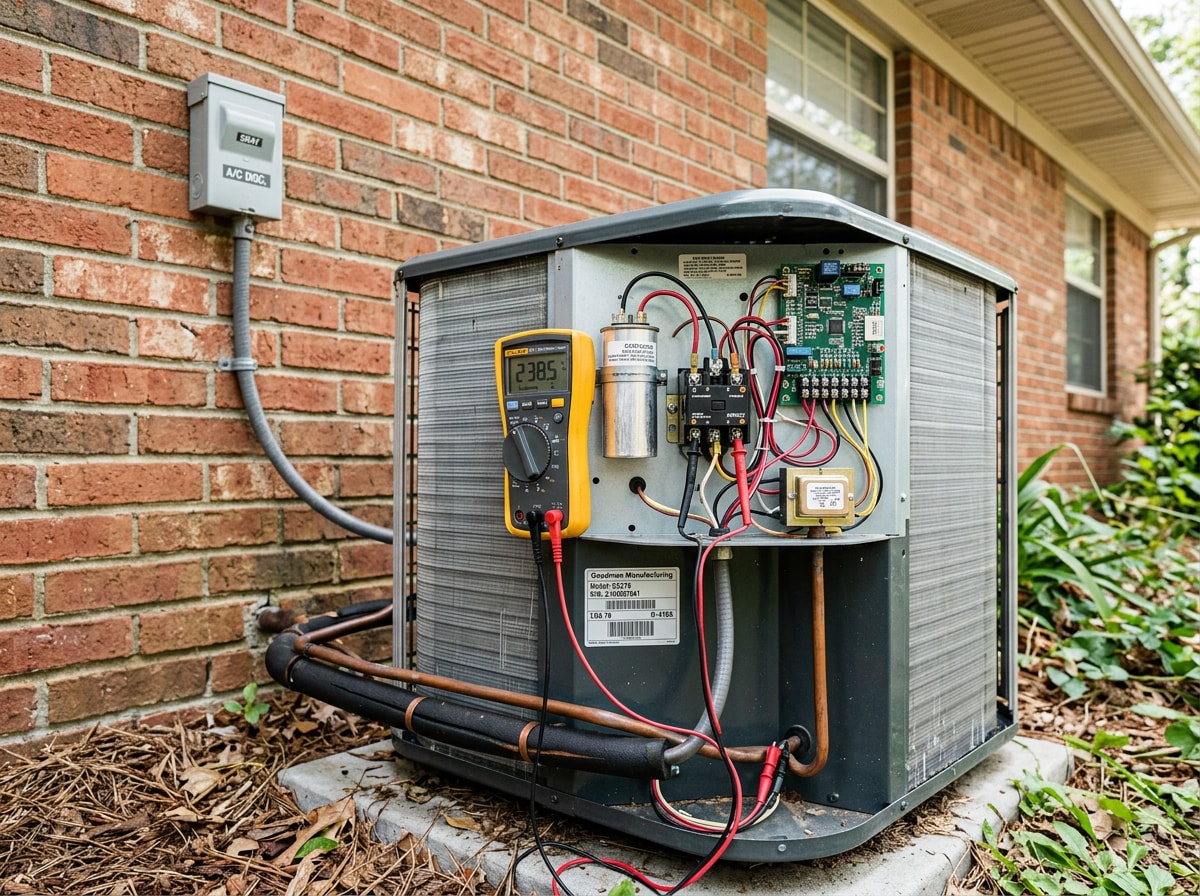
A proper diagnostic visit follows a set order. The technician works through the system methodically, using a visual inspection first and then hands-on testing with meters and gauges. The visit may end with a completed repair, or with a clear written plan for next steps.
In our service calls across Hearne and the surrounding Brazos Valley, a worn capacitor is one of the most common findings we turn up after a long run of Texas summer heat, which is exactly the kind of detail a diagnostic is built to confirm instead of guess at. If you already know you need a repair and want to see what's involved, our AC repair services page breaks down the process further.
What Technicians Check and Test During an AC Diagnostic
A thorough diagnostic doesn't jump straight to replacing parts. The technician moves through the system in a logical order, starting indoors and working out to the condenser unit, so nothing gets missed.
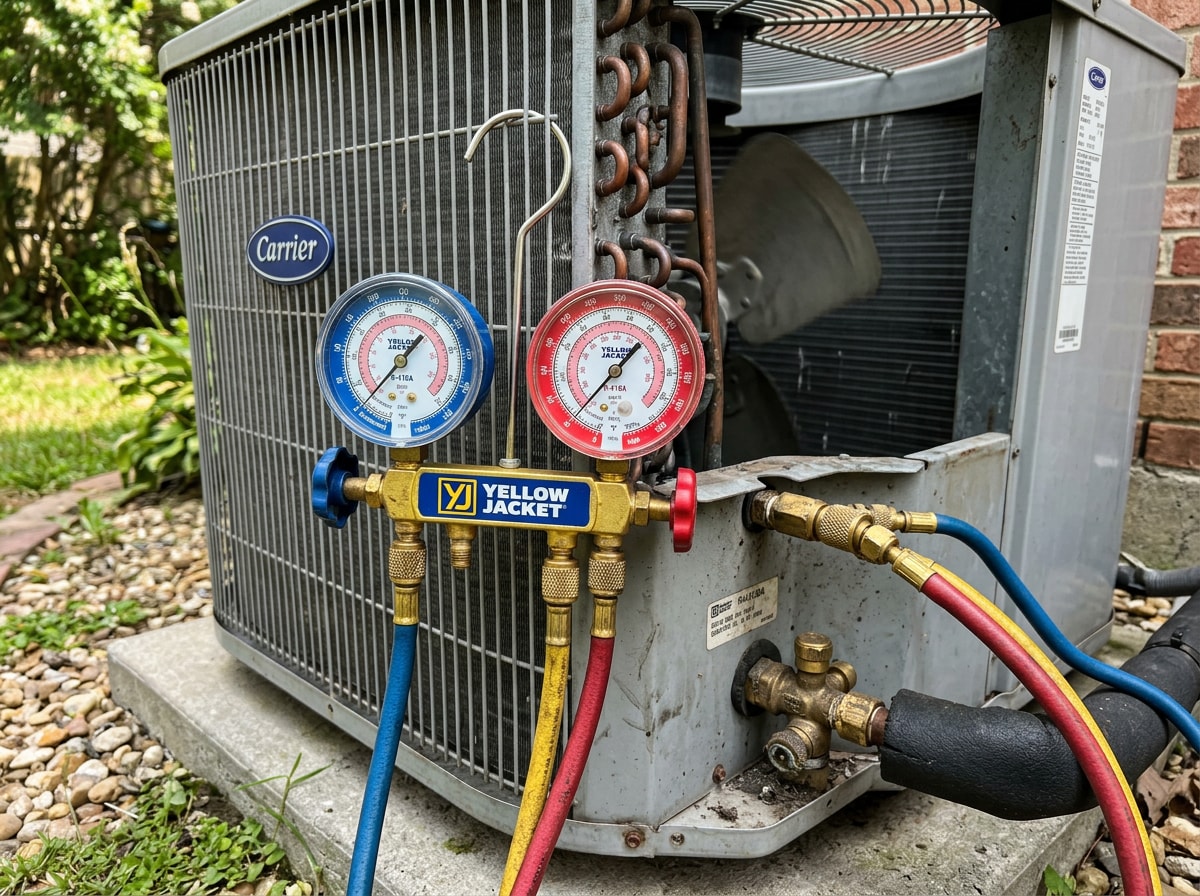
The sequence typically runs: a visual pass through the AC components, then live testing with electrical meters and refrigerant gauges to confirm what the visual inspection suggested. The four checks below make up the core of that inspection.
Compressor and Condenser Unit Assessment
Outside, the technician examines the outdoor AC unit for physical condition first, checking for dented fins, debris buildup, and rust from weather exposure. Central Texas heat and the occasional severe storm take a toll on outdoor equipment, so this step matters more here than in milder climates.
The fan gets checked for smooth operation and correct rotation, since a struggling fan motor often signals bigger problems ahead. The technician also listens for grinding, clicking, or humming from the compressor, since these noises can point to mechanical wear before it becomes a full failure.
Electrical and Control Components
Electrical testing covers the parts most likely to cause a no-cool call: the capacitor, which gives the compressor and fan motors the jolt they need to start, and the contactor, which switches power to the outdoor unit. Technicians test these against the equipment's nameplate specifications rather than guessing at normal ranges.
Amp draw readings on the compressor and fan motors show whether a component is working harder than it should, which often points to a failing part before it quits completely. Voltage checks at the disconnect and control board round out this step.
This part of the visit involves high-voltage components and stored electrical charge, so it isn't a DIY-safe step. Technicians follow OSHA's electrical safety-related work practices standards for exactly this reason.
Refrigerant Checks
Refrigerant checks measure superheat and subcooling, two calculations that tell a technician whether the system has the correct refrigerant charge for current conditions, not just whether the pressure "looks low." Low refrigerant levels are treated as a symptom of a leak somewhere in the system, not a problem solved by simply adding more.
That distinction matters for a legal reason too. Under EPA Section 608 rules, only certified technicians can purchase, handle, and recharge refrigerant. That requirement exists to prevent environmental harm and to make sure whoever works on the system actually finds and fixes the leak, rather than masking it with a quick top-off that fails again in a few weeks.
Airflow and Ductwork Inspection
The airflow check starts simple: the air filter. A clogged filter is one of the most common and most overlooked causes of poor cooling, and ENERGY STAR's maintenance guidance calls for checking it monthly for exactly this reason.
From there, the technician measures static pressure in the ductwork, which reveals whether air is moving freely or straining against restrictions. The blower motor gets tested for proper speed, since a weak blower can mimic the symptoms of a refrigerant problem. Duct connections are checked too, since loose or disconnected ductwork can send cooled air into attics or crawl spaces instead of your living room.
Common Problems an AC Diagnostic Can Reveal
A diagnostic visit typically turns up one of these recurring root causes:
- Electrical failures, like a worn capacitor or failing contactor
- Refrigerant leaks causing low charge
- Airflow restrictions from dirty filters or blocked ducts
- Condensate drain clogs
- Thermostat or control-board glitches
What makes this list tricky for homeowners is that several of these problems produce nearly identical symptoms. Warm air from the vents, short-cycling, or a system that runs constantly without cooling can all trace back to very different causes.
That overlap is exactly why a structured diagnostic beats guesswork. Swapping a capacitor when the real issue is a refrigerant leak wastes money and leaves the problem unsolved. If the findings point toward something bigger than a repair, our guide to AC unit replacement in Hearne, TX covers signs, costs, and what installation involves.
AC Diagnostic Costs: Breakdown and Factors
A diagnostic fee is a flat charge for the technician's time, tools, and expertise, separate from whatever repair ends up being needed. Most companies, including ours, credit that fee toward the cost of an approved repair.
Standard Diagnostic Fee Range
| Visit Type | Typical Fee Range | Why It Costs More |
|---|---|---|
| Standard weekday visit, single system | $75 - $150 | Baseline rate, normal business hours |
| Multi-system home | $130 - $220 | Each unit needs its own round of testing |
| After-hours or weekend call | $150 - $250 | Emergency scheduling outside normal hours |
| Hard-to-access equipment (attic, tight side yard) | $100 - $180 | Extra time to reach and test the unit |
Exact pricing varies by company and region, so these ranges are general guidance rather than a quote. Always ask what the fee covers and whether it rolls into the repair cost before the technician arrives. If you'd rather get a firm number for your specific system, you can schedule service and get pricing confirmed before any work starts.
How Long Does an AC Diagnostic Visit Take, and What's Included?
Duration depends mostly on symptom complexity and equipment access, not the clock. The diagnostic fee should cover the entire visit, from inspection through testing to a written summary, rather than being billed by the minute.
- Straightforward single-system visit: roughly 45 minutes to an hour
- Multiple systems or tight attic access: 1.5 to 2 hours, since each unit needs its own testing
- After-hours or emergency calls: similar duration, typically at a higher fee for scheduling outside normal hours
Whatever the scenario, you should leave the visit with something in writing: a summary of what the technician found, the repair options available, and confirmation of whether the diagnostic fee applies toward the repair. If the findings point toward ongoing maintenance needs rather than a single repair, ask about a maintenance agreement that can catch these issues earlier next time.
How to Prepare for the Technician's Visit
A few simple steps before the appointment help the diagnostic move faster:
- Clear a path to both the indoor air handler and the outdoor AC unit so the technician isn't working around furniture, stored items, or overgrown landscaping.
- Note when the problem started and what you noticed leading up to it, such as unusual noises, warm air, higher humidity, or the system running longer than usual.
- Have your thermostat settings and any warranty paperwork or past service records on hand, since active warranty coverage can affect repair options and cost.
These prep steps are simple, but they consistently shorten the time a technician needs to confirm what's wrong.
If you're troubleshooting a system that's running but not actually cooling, our AC troubleshooting guide for College Station, TX covers the same diagnostic logic in more depth. And if the issue turns out to be a brand-new installation rather than a repair, see what a start-up inspection verifies in our guide to HVAC commissioning in Hearne, TX.
FAQ
What Happens During an AC Inspection?
An AC inspection covers a visual check of the system followed by live testing of electrical components, refrigerant levels, and airflow. The goal is a confirmed cause for the cooling problem, not a guess, which ties back to the component-by-component breakdown above.
Why Is My AC Running but Not Cooling?
This is usually caused by one of three things: low refrigerant from a leak, restricted airflow from a dirty filter or blocked ducts, or a failing compressor. Warm air from the vents can come from any of these, which is why a diagnostic visit matters, since it confirms which cause applies to your system instead of leaving you to guess.
Is Same-Day AC Diagnostic Service Available?
Same-day appointments are often available, though scheduling tightens up during peak summer heat when call volume rises across the region. Emergency service is typically prioritized for homes with no cooling at all. Check our Hearne, TX service area page for current availability in your neighborhood.
How Much Does an AC Diagnostic Cost?
A typical diagnostic runs between $75 and $250 depending on scheduling and access, as shown in the table above. Most companies apply that fee toward an approved repair, so it isn't necessarily money spent on top of the fix.
---
This guide was reviewed by the HVAC technicians at Advantage Cooling, serving Hearne and the Brazos Valley with EPA-compliant refrigerant handling and licensed electrical testing on every diagnostic visit. Have questions about your system or ready to book? Contact us and we'll get a technician out to confirm what's wrong.