How do baseboard heaters work in Bryan, TX homes? They run entirely on natural convection, pulling cool air across a heated surface near the floor and letting the warmed air rise with no blower or ductwork involved. Electric and hydronic models generate that heat differently, and knowing which one sits under your windows makes it a lot easier to spot a problem before it turns into a full breakdown.
What Is a Baseboard Heater?
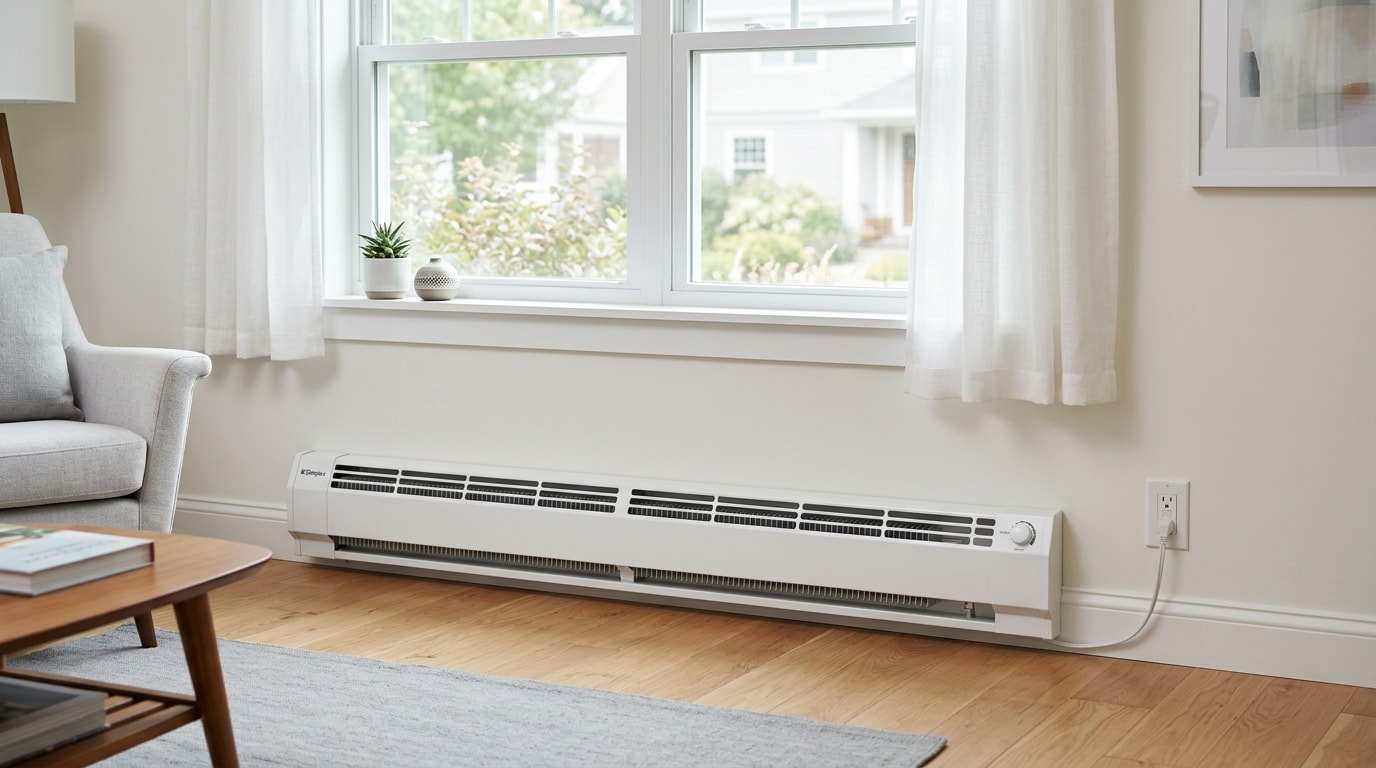
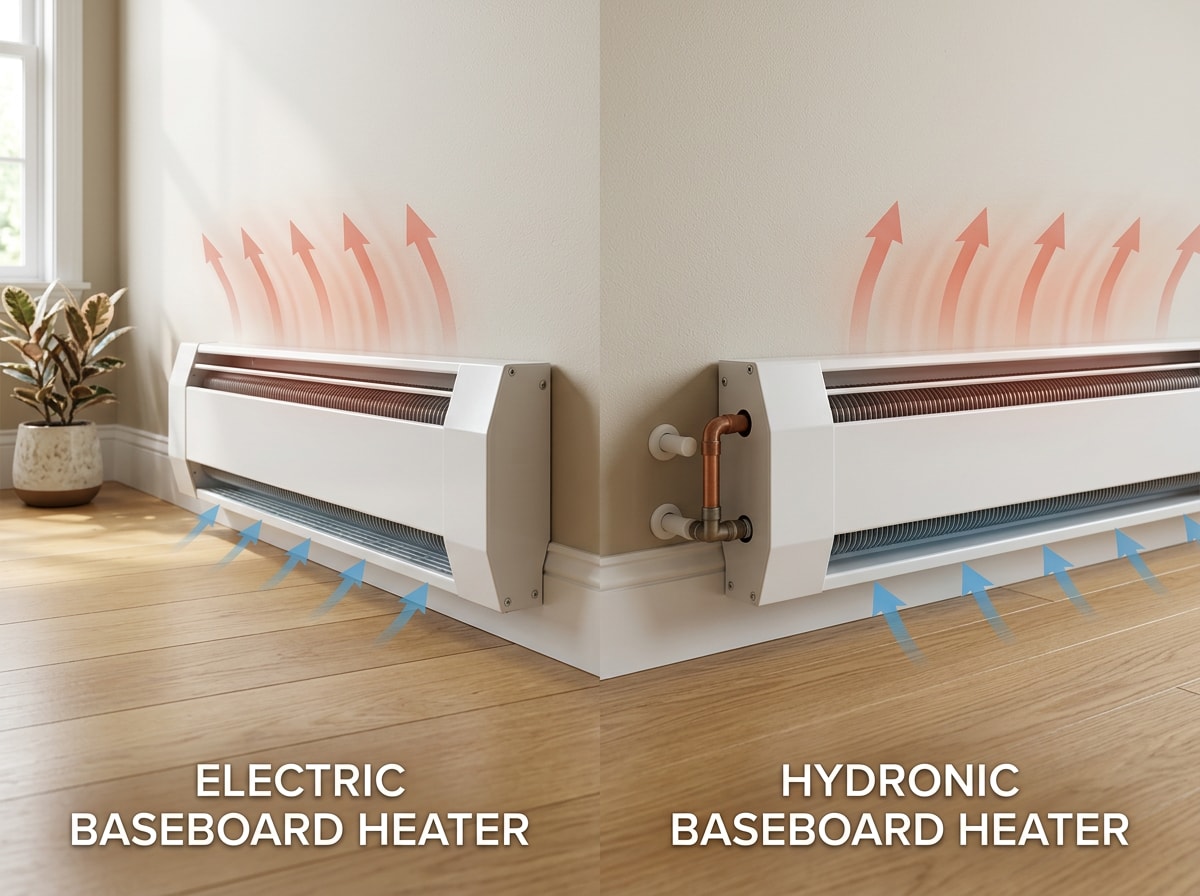
A baseboard heater is a long, low, wall-mounted unit installed near the floor, usually below windows or along exterior walls where cold air collects first. Despite the simple shape, baseboard heaters come in two distinct types that work differently under the hood: electric baseboard heaters and hydronic baseboard heaters.
Both styles share the same basic job: heating a single room or zone without relying on a central forced-air system. That makes a baseboard heater, sometimes called a wall heater, a common choice for additions, converted garages, and older Bryan, TX homes where ductwork was never part of the original build.
Because each unit heats its own space independently, homeowners get a form of zone heating. Busy rooms can run warmer while guest rooms stay cooler to save energy.
How Do Baseboard Heaters Work in Bryan, TX?
Every baseboard heater, electric or hydronic, relies on the same physical principle: natural convection. Cool air sinks to the floor, enters the unit, warms as it passes over a heated surface, and rises back into the room. This loop repeats continuously, gradually raising the room's temperature from the bottom up. The two heater types just generate that warm surface differently.
How Electric Baseboard Heaters Work
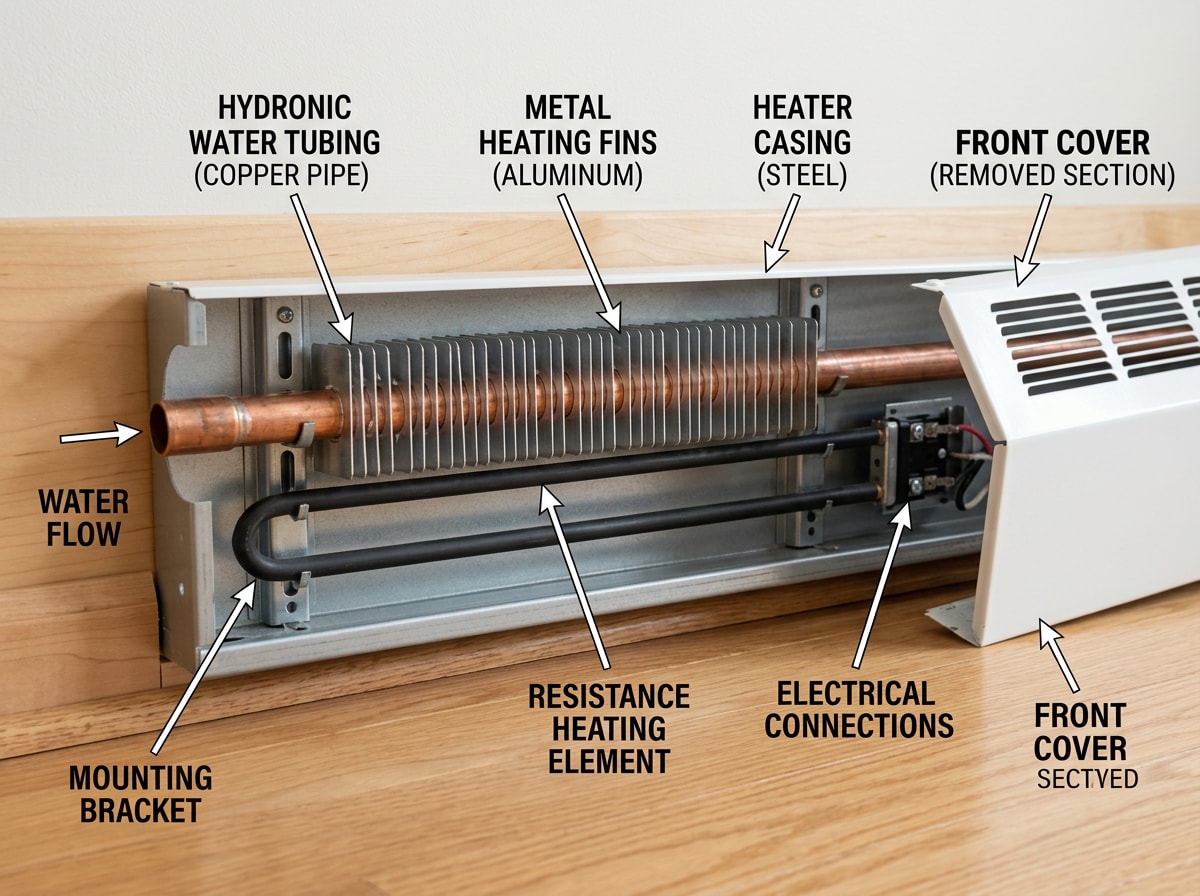
Electric baseboard heaters run electricity through a resistance element that heats a series of metal fins. Air passing over the hot fins warms through convection, rises into the room, and draws cooler air in at the bottom to repeat the cycle, all controlled by a line-voltage thermostat.
The process breaks down into four steps:
- Power reaches the resistance element. Electricity flows through a coiled wire, and resistance in the metal converts that electrical energy directly into heat.
- The element heats the metal fins. Thin aluminum or steel fins surround the element to maximize surface area, so more air contacts the hot metal at once.
- Air circulates by convection. Cool air at floor level enters the bottom of the unit, warms as it passes the fins, and exits through the top vents.
- Warm air rises and spreads. As it cools, it sinks again, creating a steady loop that gradually raises the room's temperature.
Most homeowners notice warmth within the first heating cycle, though exact timing depends on insulation, ceiling height, and outdoor temperature. A line-voltage thermostat handles the on/off cycling. Most residential units run at full power until the set temperature is reached, then shut off completely rather than modulating output.
According to the U.S. Department of Energy, electric resistance heating is 100% energy efficient in the sense that all the incoming electric energy is converted to heat , which is why these units feel warm almost as soon as the element powers up. That efficiency comes at a cost in electricity use compared to other heating equipment, but zoning helps offset it: zone heating can produce energy savings of more than 20% compared to heating the whole area of your house.
How Hydronic Baseboard Heaters Work
Hydronic baseboard heaters work on the same convection principle but generate heat differently. Instead of an electric element, these units circulate hot water or fluid through a finned tube that runs the length of the unit.
A central boiler heats the water. In self-contained models, a built-in electric element heats fluid inside the unit itself, and a pump or natural circulation moves it through the tubing.
As air passes over the hot finned tube, it warms and rises just like in electric models, drawing in cooler air behind it. The main difference homeowners notice is timing: hydronic baseboard heat takes longer to warm up because the water has to heat first, but it also holds that warmth longer after the thermostat shuts off. This produces a steadier, more even heat feel room to room, with fewer noticeable temperature swings than electric cycling on and off.
Benefits of Baseboard Heating in Bryan, TX
Baseboard heating looks a little different here than it does in colder states. With mild Gulf Coast winters, most Brazos County homes only need supplemental heat during cold snaps rather than a system that runs for months straight, and that plays directly to a baseboard heater's strengths.
- Zone heating control. Each room or zone gets its own thermostat, so you're not paying to heat spaces no one's using.
- No ductwork required. Baseboard units skip supply and return ducts entirely, which matters in additions or older homes where adding ductwork is expensive or impractical.
- Quiet heating. With no blower fan, baseboard heaters run almost silently compared to forced-air furnaces.
- Lower installation cost. Adding a unit to a single room is typically cheaper than extending central ductwork to reach it.
The trade-off is efficiency at scale. Running several baseboard heaters room by room can cost more over a season than a well-sized central system heating the whole house at once. For single rooms, additions, or a mild Bryan winter, though, a standalone unit from new heater installation often makes practical sense.
Common Problems With Baseboard Heaters
Most baseboard heater problems trace back to one of a few root causes, and many are easy to spot before they require a service call.
Blocked airflow is the most common culprit. Furniture, curtains, rugs, or toys pushed against the unit restrict the convection cycle, so a unit that seems to run nonstop is often fighting an obstruction rather than failing outright.
Older units can also develop uneven heat output as fins corrode, bend, or collect dust, reducing the surface area available for convection. In older Bryan homes, it's common to find baseboard units still wired from the original construction decades ago, with corroded fins cutting heat output well before the thermostat shows any obvious fault. Electric units may develop worn thermostats or failing elements over time, while hydronic systems lose efficiency when air gets trapped in the lines.
Clearance matters for safety and performance alike. One city fire department's guidance puts it simply: baseboard heaters need one-foot of clearance and portable space heaters need three-feet of clearance. Exact requirements vary by model, so check the nameplate for manufacturer specs.
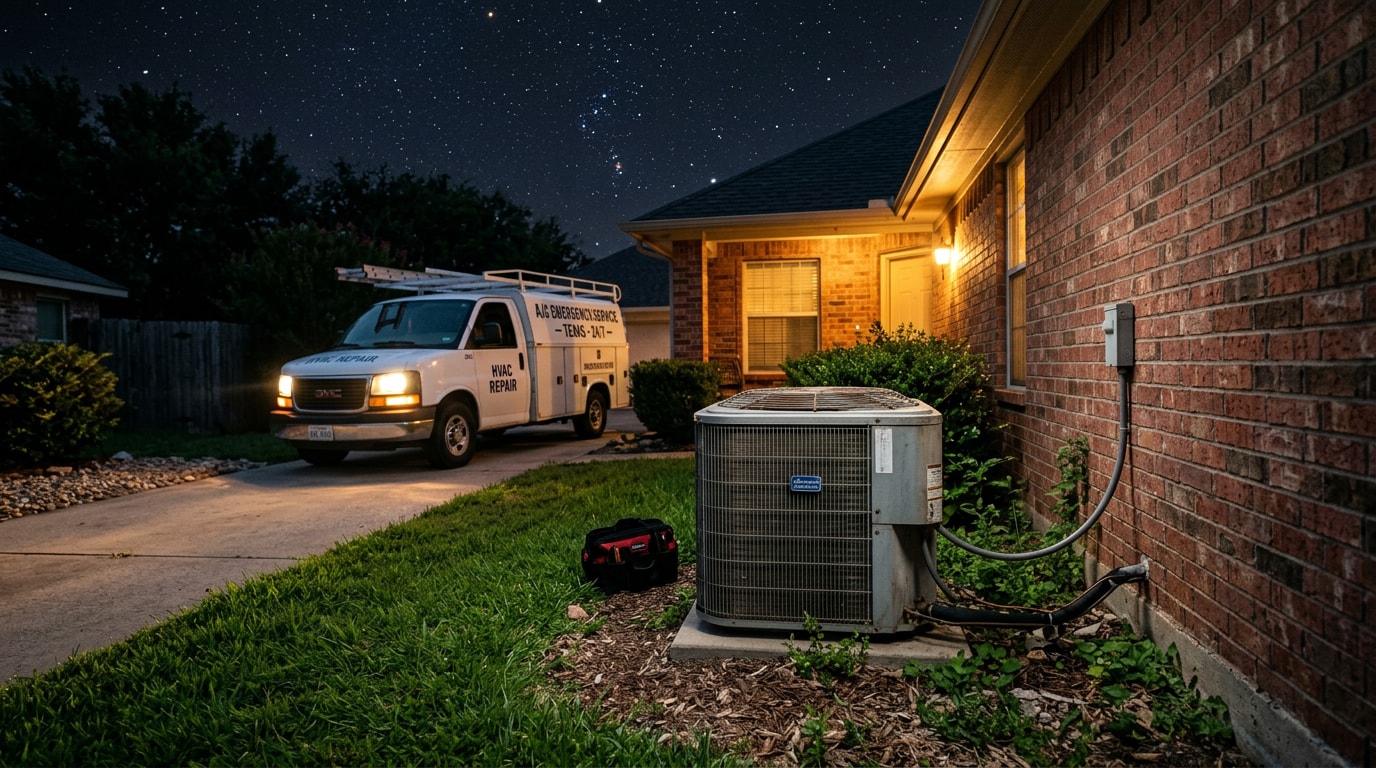
If a unit won't heat evenly, cycles constantly, or trips a breaker, that's a sign to schedule heater repair rather than wait for a full outage during a cold snap. You can also schedule service directly so a technician can confirm whether the issue is the element, the thermostat, or the wiring.
Baseboard Heater Maintenance Tips
Routine upkeep prevents most of the problems above and extends how long a unit lasts.
- Clean the fins by dusting and vacuuming every few months with a soft brush attachment, which removes buildup without bending the delicate metal.
- Check covers for discoloration. Yellowing or warping on the cover can signal the element is running hotter than normal.
- Bleed hydronic lines periodically. Trapped air in hot water baseboard systems causes gurgling noises and cold spots; opening the bleed valve releases trapped air so water can circulate freely again.
- Keep the area clear. Maintaining proper clearance keeps convection airflow working as it should.
With regular care, many baseboard heaters last well into their second decade, though usage patterns and water quality for hydronic systems affect that range. A heater maintenance plan can catch a failing element or stuck bleed valve before it turns into a full replacement. If a unit is old enough that parts are hard to source, it may be more cost-effective to look at a broader heating system replacement{{SITE_URL}}/blog/furnace-replacement-bryan-tx) instead of patching the same unit every winter.
For a full visit covering baseboard units, central equipment, or both, our HVAC inspection service checks wiring, elements, and clearance in one trip. You can learn more about the team behind these visits on our homepage.
FAQ
Are baseboard heaters expensive to run?
Running costs depend on type and local utility rates. Electric baseboard heaters tend to cost more per hour than hydronic systems tied to a gas boiler, since electricity is often pricier per unit of heat than natural gas. Hydronic units cost more upfront but can even out over time thanks to better heat retention. Zone heating control helps limit the bill either way, since only occupied rooms need to run.
What's the difference between electric and hydronic baseboard heaters?
Electric baseboard heaters use a resistance element to heat metal fins directly, warming up fast but cooling quickly once shut off. Hydronic baseboard heaters circulate hot water or fluid through a finned tube, heating more slowly but holding warmth longer. Both rely on natural convection to move warm air into the room; the real difference is simply the heat source.
Why are baseboard heaters installed under windows?
Windows and exterior walls are where cold air enters a room fastest. Placing the heater there lets it intercept that cold air right as it drops to the floor, so the convection cycle starts working against the draft instead of trying to catch up with it after it has already spread across the room.
Do baseboard heaters have fans?
Most conventional baseboard heaters, electric or hydronic, don't use a fan. They rely entirely on natural convection, which is why they run silently but also why they warm a room more gradually than a fan-forced wall heater or furnace.
Do baseboard heaters need to be on all the time?
No. A baseboard heater's thermostat is designed to cycle the unit on and off as needed, and leaving a heater on constantly doesn't heat a room faster or save money. Setting a steady, reasonable temperature and letting the thermostat manage cycling is usually more efficient than running it nonstop or adjusting it up and down repeatedly.
How long do baseboard heaters last?
Many baseboard heaters last well into their second decade with regular maintenance, though lifespan varies based on type, usage, and water quality for hydronic systems. Electric units often last slightly longer since they have fewer moving parts. Uneven heat, constant cycling, or visible corrosion are signs it may be time to replace the unit.
Are baseboard heaters safe?
Yes, when installed and used correctly. Hardwired baseboard heaters maintain safer surface temperatures than portable space heaters and avoid the tip-over and cord-related risks common with portable units. Clearance from furniture, curtains, and bedding is the biggest factor in baseboard heater safety. National fire data backs that up: a vast majority of home heating fire deaths (88%) involved stationary or portable space heaters.
---
Written by the service team at Advantage Cooling, Heating & Plumbing, an HVAC contractor serving Bryan, TX and the greater Brazos Valley. Our technicians diagnose and repair both baseboard and central heating systems across local homes each winter. Questions about a specific unit? Contact us and we'll help you figure out what's going on.