A geothermal heating and cooling system in Brenham, TX pulls heat out of the ground in winter and pushes it back into the ground in summer, using a loop field instead of an outdoor condenser fighting 100°F August air. Advantage Cooling & Heating sizes and installs these systems for Washington County homes and light-commercial buildings, and we've seen plenty of quotes that skip the one detail that changed for everybody buying in 2026: the federal tax credit. Here's what actually goes into a Brenham installation, what it costs this year, and what to ask before you sign anything.
How a Geothermal System Works in Brenham, TX
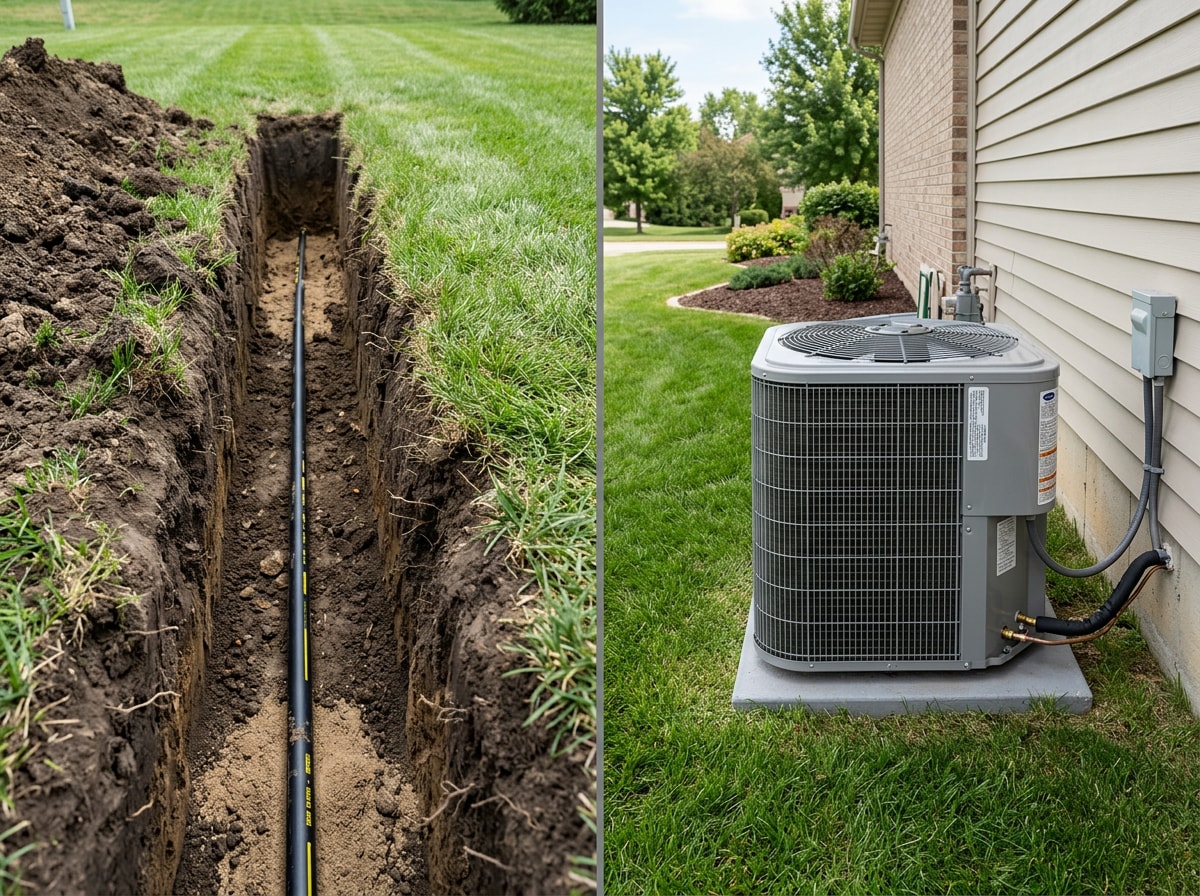
A geothermal, or ground-source, system swaps the outdoor condenser on a standard heat pump for a buried loop of pipe filled with water or refrigerant. Below the frost line, ground temperature barely moves between January and August, so the system always has a stable source to pull heat from or dump heat into. That's the entire efficiency advantage in one sentence: it's moving heat through a medium that doesn't swing 70 degrees between seasons the way Texas air does.
Three components make up every system:
- The ground loop (horizontal, vertical, or pond/lake) that exchanges heat with the earth or a water source
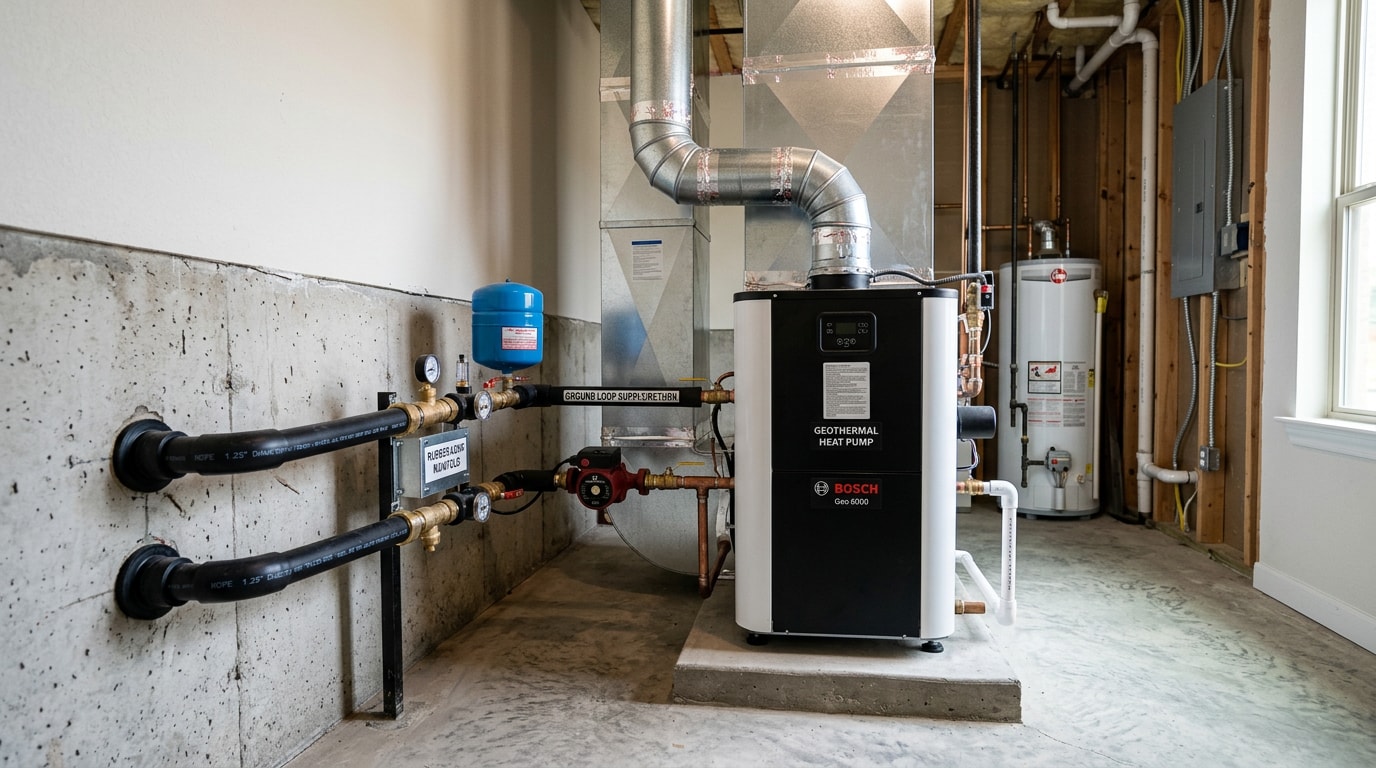
- The indoor heat pump unit that compresses and distributes that heat through your home's ducts
- The distribution system, usually your existing ductwork, that moves conditioned air to each room
Geothermal Heating and Cooling System Installation in Brenham, TX
Every installation starts with a site evaluation, soil type, available yard space, and square footage all factor into sizing the loop field and the indoor unit correctly. Get it wrong and you end up with a system that short-cycles in July or can't keep up with a February cold snap.
Residential Installation Steps
- Site and load evaluation (soil type, lot size, existing ductwork condition)
- Loop design selection: horizontal, vertical, or pond/lake, based on available space
- Permitting and utility locates
- Loop field installation (trenching or drilling)
- Indoor heat pump installation and connection to ductwork
- System startup, airflow balancing, and testing
A typical Brenham home retrofit lands in the 3 to 4 ton range with a horizontal loop trench, assuming there's enough yard space. Tighter lots usually mean a vertical bore field instead.
Commercial Geothermal Sizing
Commercial buildings carry heavier, more constant cooling loads than homes, so they need larger loop fields and higher-tonnage equipment. A small Brenham retail building might need a 6-ton system with a multi-well vertical loop field, while that same-size home gets by on far less. IGSHPA continues to work with U.S. states and federal governments to ensure that ground-source heat pumps are designed and installed for long-term success , and its certification standards are the baseline most reputable commercial installers follow for loop sizing. If your property needs a full HVAC evaluation before a geothermal retrofit, our HVAC inspection service covers load calculations and ductwork condition.
Benefits of a Geothermal Heating and Cooling System
Geothermal systems move heat instead of burning fuel or running resistance coils to generate it, and that's where the efficiency numbers come from.
- Lower energy use.
ENERGY STAR-certified geothermal heat pumps use 61 percent less energy than a standard model, saving nearly $830 annually, and more than $9,500 over the 15-year life of the product .
- Reduced emissions.
The EPA estimates geothermal heat pumps can reduce energy consumption, and corresponding emissions, up to 44% compared to air-source heat pumps and up to 72% compared to electric resistance heating with standard air-conditioning equipment .
- Longer equipment life. The indoor heat pump isn't exposed to hail, ice, or direct sun the way an outdoor condenser is, which generally extends its service life.
- Quieter operation. No outdoor compressor means less noise at the property line.
- Steadier comfort. Because the ground stays near a constant temperature, the system doesn't lose capacity the way an air-source heat pump does on the hottest or coldest days.
Geothermal Heating and Cooling System Cost in Brenham, TX (2026)
Cost depends on home size, insulation quality, soil conditions, and which loop type fits your lot. Here's how the three main options compare:
| Loop Type | Yard Space Needed | Upfront Cost | Best For |
|---|---|---|---|
| Horizontal Loop | Large (shallow trenches) | Lower | Rural lots, acreage |
| Vertical Loop | Small (deep bores) | Higher (drilling cost) | Tight residential lots |
| Pond/Lake Loop | Water access required | Lowest where available | Waterfront properties |
A site-specific quote matters far more than any national average, since Washington County soil and drilling access vary block to block. Request a free estimate to get numbers specific to your property.
The 2026 Tax Credit Change Most Quotes Won't Mention
If you're comparing geothermal to a standard heat pump using 2024 numbers, stop. The federal Residential Clean Energy Credit (Section 25D) that covered 30% of geothermal installation costs ended for any system placed in service after December 31, 2025. The One Big Beautiful Bill Act (P.L. 119-21), enacted on July 4, 2025, revised dates and provisions in the Internal Revenue Code that affect some or all of the tax credits that used to make geothermal's upfront cost easier to swallow. For 2026 installs, the math runs on energy savings and any available state or utility rebates instead of a federal credit, so get an updated proposal rather than trusting an old brochure.
Why Choose a Professional for Your Geothermal Installation in Brenham
Look for an installer with technicians trained specifically on ground-source equipment, not just conventional split systems. A trustworthy Brenham geothermal contractor offers transparent pricing, explains loop options clearly, and backs the work with real warranty support. Compare at least two quotes before committing, and ask each contractor how many ground-source systems they've actually commissioned, not just serviced.
Once a system is in, routine upkeep protects that efficiency for decades. Our HVAC maintenance agreement covers seasonal checks on the indoor unit, and we outlined a full seasonal checklist in our heating system tune-up guide for Caldwell, TX that applies just as well to a geothermal heat pump's indoor components. See our Brenham, TX service area page for coverage details, or browse recent installs on our projects page.
Advantage Cooling & Heating services the greater Brenham area from our homepage, alongside standard HVAC contractor services for homes that aren't ready for a ground-source conversion yet.
FAQ
Do I need a permit for a geothermal system in Brenham, TX?
Yes, in most cases. Loop installation, especially drilling for a vertical system, typically requires a permit and an inspection before and after the work. A qualified installer files the paperwork for you and coordinates utility locates before any digging starts.
Will a geothermal system be noisy inside my home?
No. The compressor and fan live indoors rather than sitting outside exposed to weather, and a properly installed unit runs about as loud as a refrigerator. There's no outdoor condenser cycling on and off at the side of the house.
How long do geothermal heating and cooling systems last?
The indoor heat pump typically lasts 20 to 25 years, and the underground loop itself can last 50 years or more since it has no moving parts and isn't exposed to weather. That's roughly double the lifespan of a standard outdoor AC condenser.
What repairs do geothermal systems typically need?
The most common issues are refrigerant leaks, compressor wear, circulating pump failures, and heat exchanger buildup. Reduced heating or cooling output, rising utility bills, or new operating noises are all signs it's time to call a technician before a small issue becomes a full system failure.
Can one contractor handle horizontal, vertical, and pond loop systems?
A qualified geothermal technician should be comfortable with all three configurations, but confirm hands-on experience with your specific layout before hiring. Horizontal, vertical, and pond/lake loops each have different failure points and service requirements.
Is geothermal worth it in Brenham's climate?
For homes that plan to stay 10+ years, usually yes. Brenham's long cooling season plays to geothermal's strength, since the ground stays cooler than outdoor air for most of the year, and the ENERGY STAR efficiency data above holds regardless of state incentives. The upfront cost is the real barrier, so getting an accurate site-specific quote is the only way to know your actual payback timeline.
Ready to find out what a geothermal system would cost for your specific property? Schedule service with Advantage Cooling & Heating and we'll walk your lot, check your soil and space constraints, and give you real numbers instead of a national average.