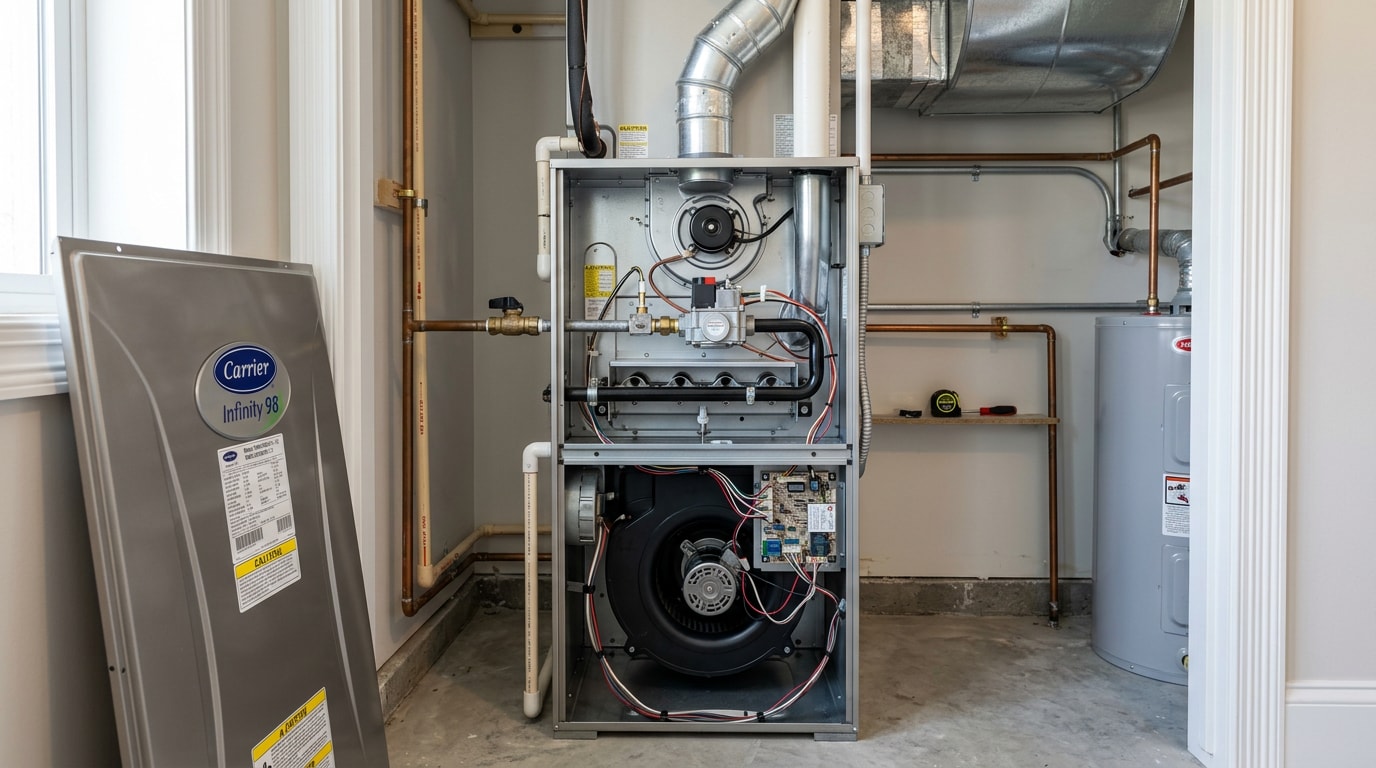
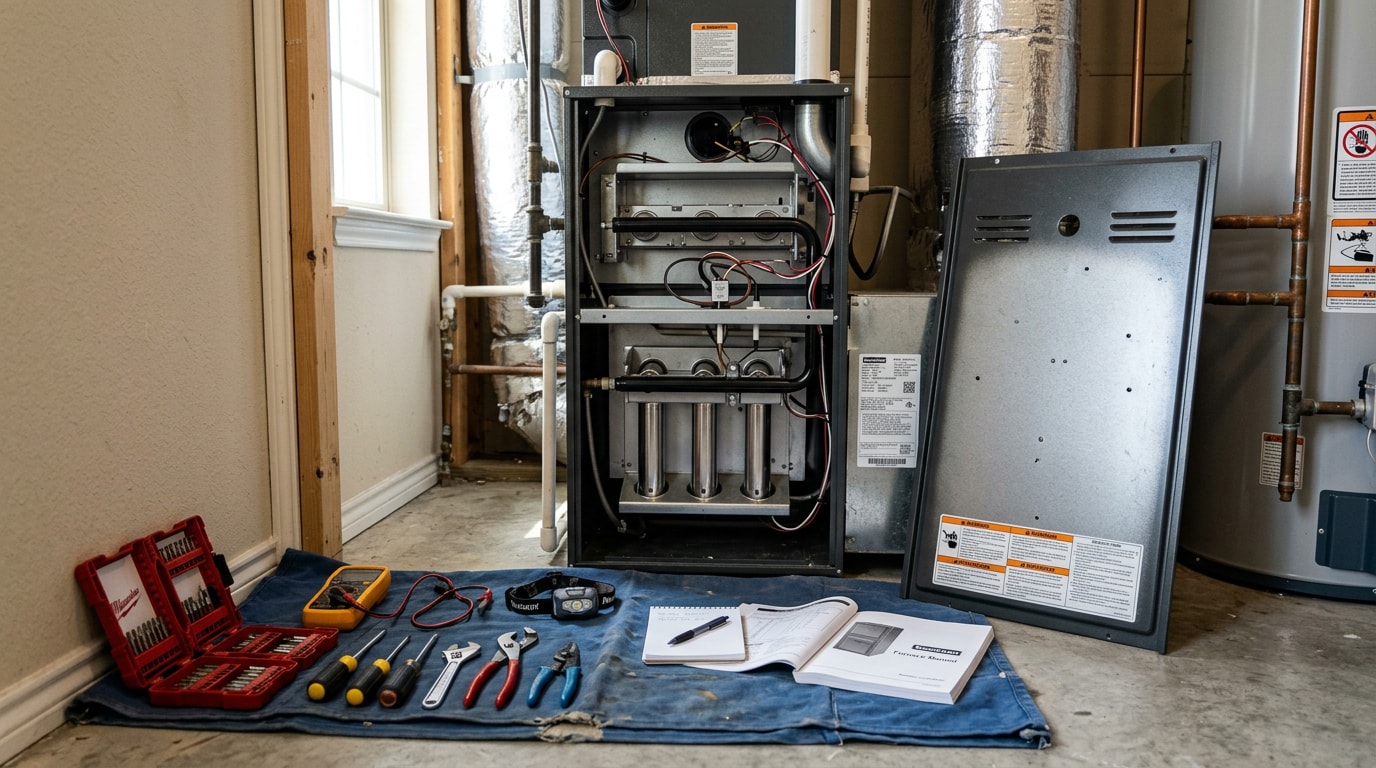
A heating system tune up in Caldwell, TX catches the small failures, a cracked igniter, a clogged filter, a corroded sensor, before they turn into a no-heat call at 2 a.m. This guide breaks down exactly what a tune-up includes, what it costs in 2026, and the five warning signs that mean you need repair instead of routine maintenance.
What's Included in a Caldwell Heating System Tune-Up
A real tune-up is a checklist, not a quick filter swap. Here's what a licensed technician should actually do during a visit:
- Inspect and tighten electrical connections
- Calibrate the thermostat
- Replace or clean the air filter
- Clean the blower wheel and lubricate the motor
- Test ignition, burners, and gas pressure
- Run a carbon monoxide safety check on the heat exchanger
- Inspect visible ductwork for leaks or disconnections
Nationally, a typical furnace tune-up usually ranges from $70 to $200, though more comprehensive services or annual service plans can cost between $150 and $400 . The exact number depends on your fuel type, how long the system has gone without service, and whether a technician finds a part that needs attention during the visit.
| Service | Typical Price Range | When It Applies |
|---|---|---|
| Standard heating tune-up | $70–$200 | Annual fall maintenance on a working system |
| Tune-up with minor repair | $150–$400 | Worn igniter, dirty flame sensor, thermostat replacement |
| Full system diagnostic | Quote-based | Noise, odor, short cycling, or no-heat calls |
If you'd rather not track a maintenance date on your own calendar, a Seasonal HVAC Tune-Up plan puts the fall visit on autopilot.
Why Burleson County Homes Need a Fall Tune-Up
Heating equipment in this part of Texas sits idle for most of the year, which hides problems. Thermostat failures go unnoticed until the first cold snap, dirty filters restrict airflow nobody's watching, and ignition components corrode quietly in the off-season.
Caldwell's winters are short, but they're not mild enough to skip. The coldest month of the year in Caldwell is January, with an average low of 41°F and high of 60°F , and cold fronts can drop temperatures further overnight. A system that hasn't run since last February needs to fire up correctly the first time, not after a technician has already been called out for an emergency repair.
A clogged filter makes the blower motor strain to push air through the house, which drives up energy use and shortens equipment life. That's the real math behind annual heater maintenance: it's cheaper to catch a worn igniter in October than to replace a cracked heat exchanger in January.
Five Signs You Need Repair, Not Just a Tune-Up
A tune-up cleans, inspects, and calibrates a system that's basically healthy. Repair service addresses a system that's already failing. Here's how to tell the difference before you book:
- Unusual noise. Banging, shrieking, or rattling almost always means a mechanical problem, a loose blower wheel, a failing motor bearing, or a cracked component, that a standard tune-up won't fix.
- Weak or uneven airflow from the vents in some rooms but not others.
- A furnace that takes noticeably longer to bring the house up to temperature.
- Short cycling, where the system turns on and off rapidly instead of running a full cycle.
- Rising heating bills with no change in how you use the thermostat.
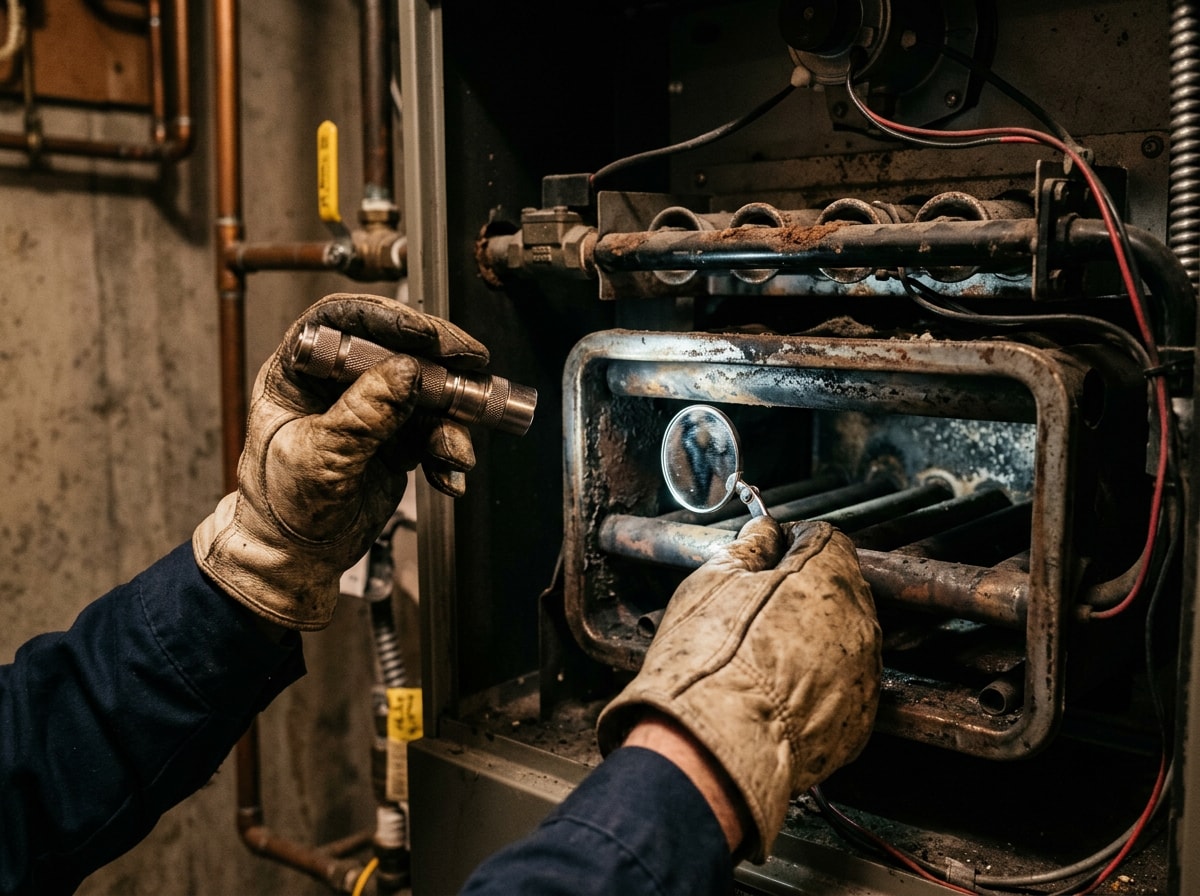
If you're hearing new noises or smelling anything unusual, skip the maintenance call and ask for diagnostic heater repair instead. A malfunctioning heat exchanger can also leak carbon monoxide. Carbon monoxide is an odorless, colorless gas that kills without warning , which is why having your heating system serviced annually is one of the few safety steps a homeowner can't really skip.
Furnace vs. Heat Pump Tune-Ups
Not every Caldwell home heats the same way, and the checklist changes depending on what's installed.
Gas and electric furnaces need combustion and heat-exchanger checks, since these systems only run part of the year and components can corrode or crack during the off-season.
Heat pumps run far more hours annually because they handle both heating and cooling, so the checklist shifts toward refrigerant charge, coil cleanliness, and defrost-cycle operation instead of combustion safety. Protecting that year-round efficiency is the whole point of scheduled AC maintenance paired with a heating check each fall.
Either way, a new heater installation resets the maintenance clock and usually comes with a cleaner efficiency baseline than patching an older unit.
Why a Licensed Technician Matters
A homeowner can swap a filter and wipe dust off a cabinet. What a homeowner can't safely check:
- Combustion analysis to confirm safe, efficient burning
- Gas pressure measurements against manufacturer specs
- Heat-exchanger inspection for hairline cracks that risk carbon monoxide leaks
That depth of inspection is the real value behind professional heating maintenance. It's not a filter swap with a markup. If it's been more than a year since your last check, an HVAC inspection is a reasonable starting point before committing to a full tune-up or repair.
Repair or Replace? When It's Time for a New System
Not every problem a tune-up uncovers is fixable with a quick repair. Your furnace or boiler is more than 15 years old, consider replacing with an ENERGY STAR qualified furnace, which is 15% more efficient than a conventional furnace . Pair that age threshold with repair cost: if the quote runs close to half the price of a new unit, replacement usually wins long term.
| Furnace Age | Issue Type | Recommended Path |
|---|---|---|
| Under 10 years | Isolated issue (sensor, igniter, capacitor) | Repair, lower upfront cost |
| 10 to 15 years | Recurring issues each season | Repair short-term, start budgeting to replace |
| 15+ years | Major component failure (heat exchanger, blower) | Replacement, better efficiency and warranty coverage |
Equipment that needs frequent repairs while your energy bills are going up is one of the clearer signals it's time to stop repairing. See our furnace replacement options if your technician flags a system that's past its reasonable repair window, or review furnace maintenance plans if the unit still has years left in it.
For a closer look at how this plays out on a real furnace inspection, our furnace maintenance guide for Navasota homeowners walks through a similar decision in a neighboring Brazos Valley town.
Scheduling Service in Caldwell
Advantage Cooling services Caldwell and the rest of Burleson County alongside Bryan, College Station, and Navasota. Our technicians see the same pattern every fall in Caldwell: systems that sat untouched since spring throw ignition or airflow problems the first cold morning they're asked to run hard. A pre-season check catches that before it becomes an after-hours repair bill.
Ready to get on the schedule before the next cold front? Schedule service and we'll get a technician out before you need your heat the most.
FAQ
What's included in a heating system tune-up?
A standard tune-up includes a full inspection of electrical connections, thermostat calibration, filter replacement, blower and motor cleaning, ignition and burner testing, and a carbon monoxide safety check. The goal is confirming the system runs efficiently and safely before heavy winter use.
How much does a furnace tune-up cost?
Most tune-ups run $70 to $200, with annual maintenance plans or more comprehensive visits running $150 to $400 depending on fuel type and what the technician finds once the panel is off.
Can I tune up my heating system myself?
You can safely confirm the fuel vent is clean and undamaged, visually check the pilot burner, and wipe dirt or grime off the cabinet. Gas pressure testing, combustion analysis, and heat-exchanger inspection require a licensed technician for safety and accuracy.
How often should you get a furnace tune-up?
Most homeowners should schedule heating maintenance in early fall, before the first cold front arrives. Units over 15 years old, or heat pumps running year-round for both heating and cooling, may benefit from a check twice a year instead.
Is a furnace tune-up worth it?
Yes. A tune-up typically costs far less than an emergency repair call or a premature replacement that follows a preventable breakdown. Routine maintenance also tends to lower energy bills by keeping the system running the way it was designed to.