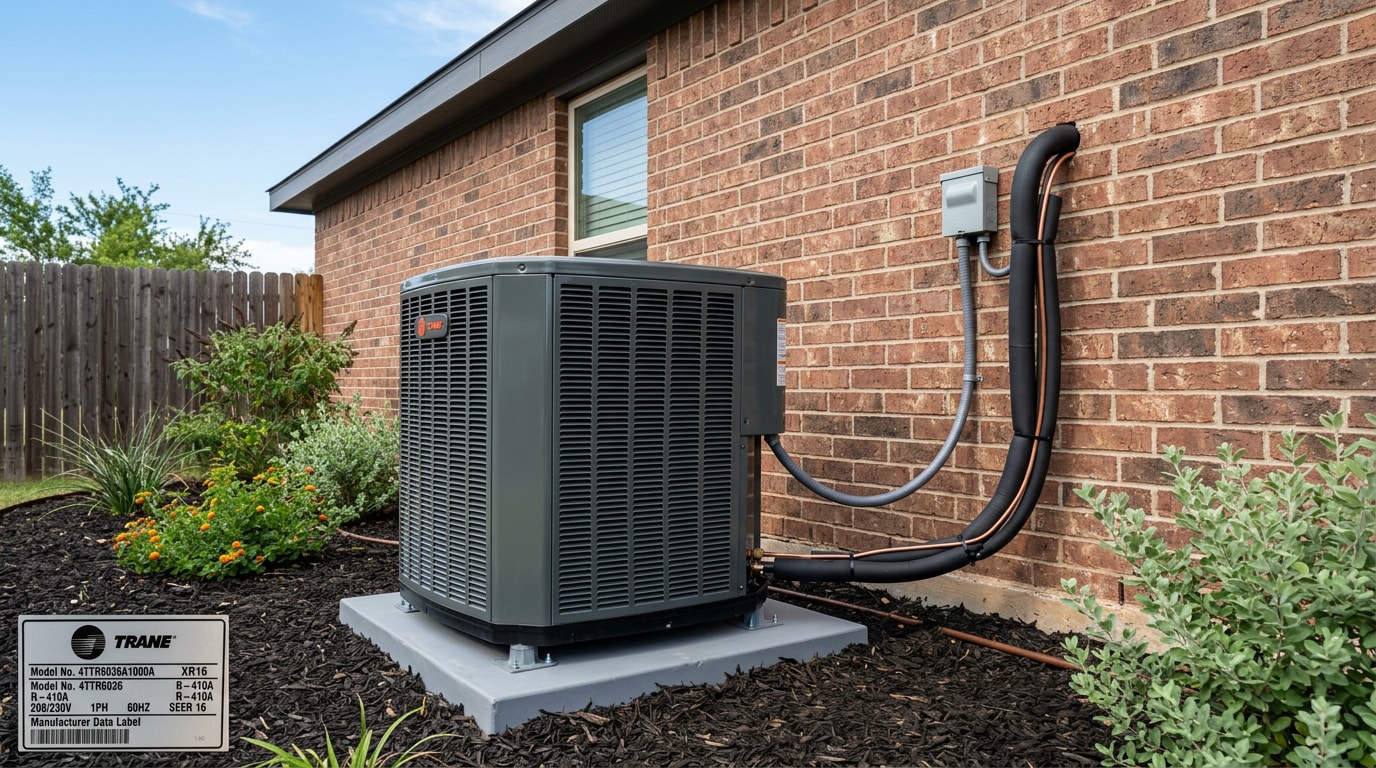
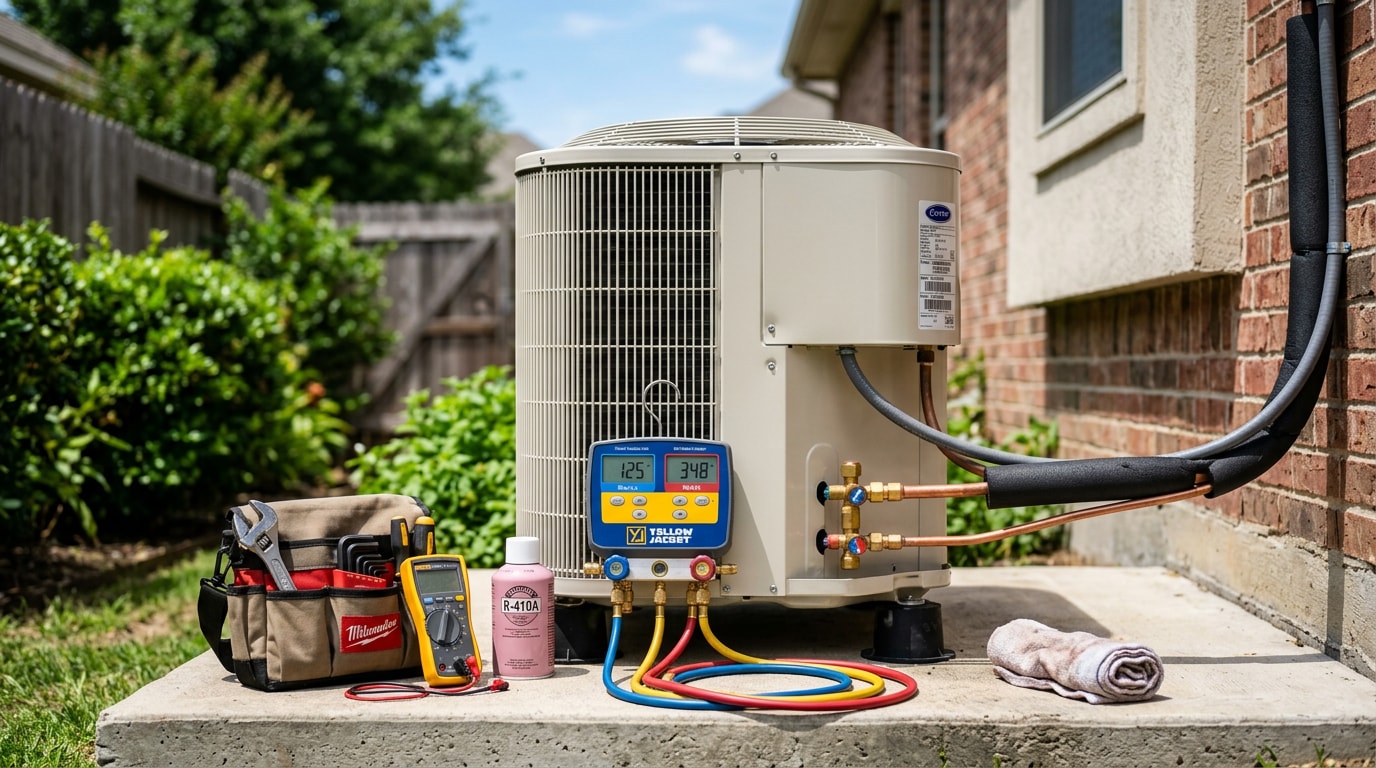
An ac unit tune up in Bryan, TX is the cheapest insurance you'll ever buy against a July compressor failure. Weather records show Bryan-College Station has logged stretches of 99 days at or above 90°F between June and September, and every one of those days leans on the same handful of parts: capacitors, coils, contactors, and a condensate line that nobody thinks about until it backs up. Skip the spring visit and you're betting the whole summer on parts a technician could have tested in twenty minutes.
What's Included in an AC Unit Tune-Up
A professional tune-up isn't one task, it's a short list of checks that each target a specific way AC systems fail in Texas heat. Here's what should happen during a real visit, not a five-minute filter swap:
- Filter replacement so airflow stays steady and the blower doesn't strain
- Refrigerant level check to confirm proper charge and rule out a slow leak
- Coil cleaning on both the indoor evaporator and outdoor condenser
- Condensate drain clearing to prevent clogs, backups, and water damage
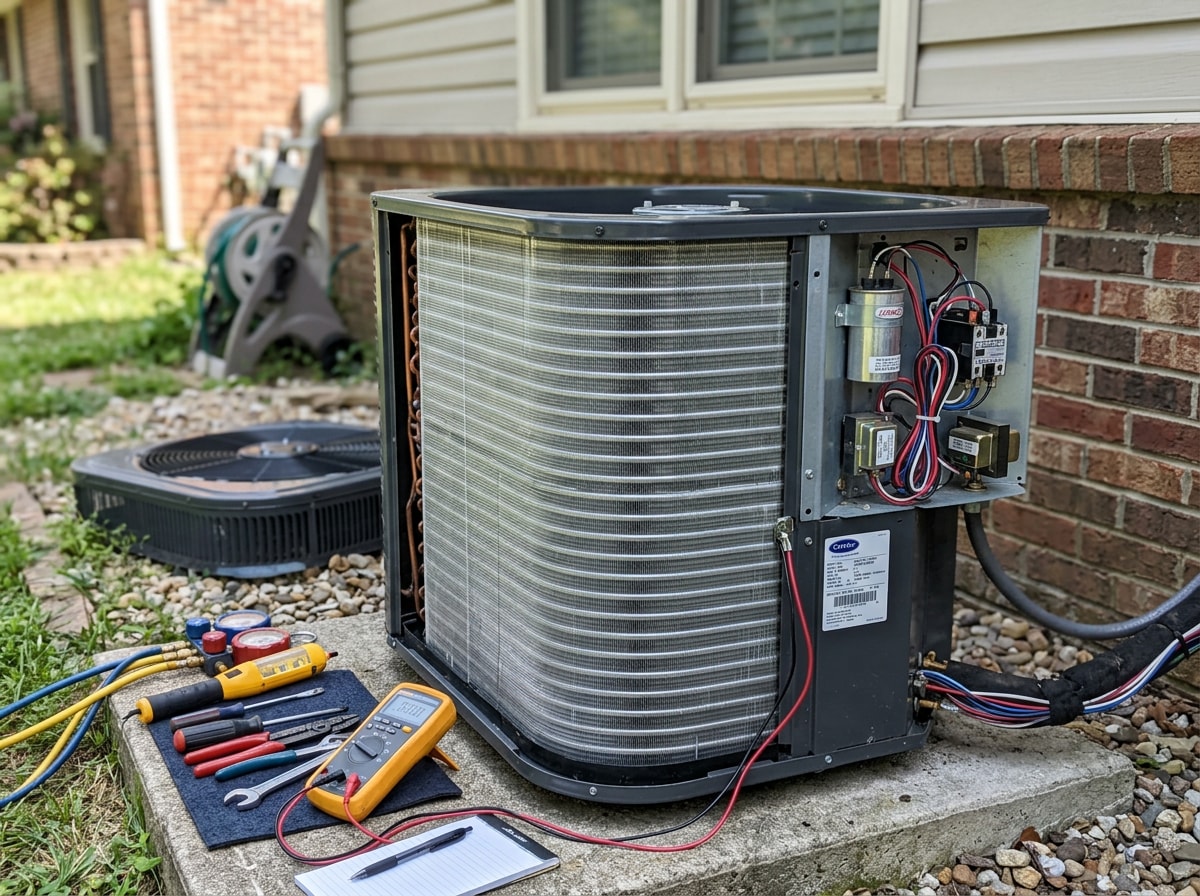
- Electrical inspection covering connections, the capacitor, and the contactor
- Thermostat calibration so the temperature it reports matches reality
- Safety control testing to confirm the system shuts down correctly if something goes wrong
Two of these deserve extra attention because they're the most common source of mid-summer breakdowns. A weak capacitor can test fine in March and fail outright after three straight months of daily cycling, which is exactly why a single annual visit isn't enough in this climate. A dirty condenser coil is the quietest efficiency killer on the list. It doesn't throw an error code; it just makes the system run longer and harder to hit the same setpoint.
Refrigerant work in particular isn't optional-DIY territory. Under the federal Clean Air Act, anyone who connects gauges or adds refrigerant to a system has to hold EPA Section 608 certification, and in Texas the company performing the work also needs a TDLR Air Conditioning and Refrigeration contractor license. That's two separate credentials, not one, and it's worth asking a provider to show both.
If your system is already acting up rather than just due for upkeep, routine maintenance isn't the right fix. Our AC repair services page covers what to expect when something's actually broken.
How Often to Schedule AC Maintenance in Bryan's Climate
Most national guidance says once a year, timed before cooling season starts. Bryan's climate makes a stronger case for twice.
The ideal windows fall in March through early April, before the system faces its first real workload, and again in September through October, as it winds down from peak season. ENERGY STAR's seasonal maintenance guidance recommends checking cooling equipment in spring and heating equipment in fall for the same reason: contractors get busy once the weather turns, and problems caught early are cheaper than problems caught during a 100°F week.
A seasonal tune-up can catch developing issues before peak use. It can't prevent every breakdown. Components still fail on their own timeline sometimes, no matter how well a system is maintained, so treat a tune-up as risk reduction, not a guarantee.
What Happens During a Tune-Up Visit
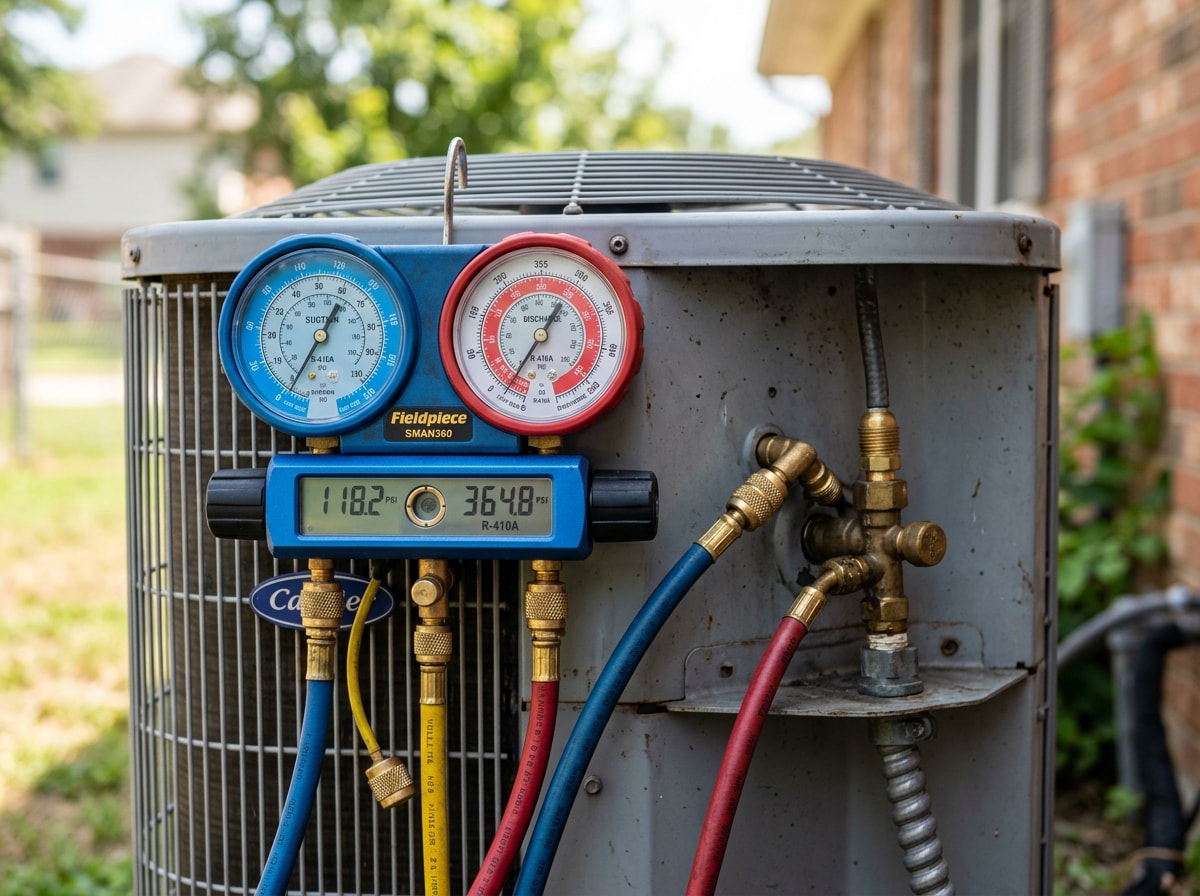
Knowing what's on the checklist is one thing. Knowing how a visit actually unfolds is another, and it should follow a consistent order rather than a rushed once-over.
- Walkthrough and baseline check. The technician inspects the outdoor condenser, indoor air handler, ductwork connections, and thermostat to get a read on the system's condition before touching anything.
- Diagnostic testing. Electrical components get tested for safety and performance, and refrigerant charge is checked against manufacturer specs.
- Cleaning and calibration. Coils get cleaned, the drain line gets cleared, and the thermostat gets calibrated.
- Final walkthrough. The technician should tell you what they found, what (if anything) needs attention, and what to expect before the next visit.
That last step matters more than people give it credit for. A tune-up that ends with "everything's fine" and no detail isn't much of a tune-up.
Why Professional Maintenance Beats DIY
Changing a filter is something any homeowner can do between visits. Calibrating a thermostat, testing a capacitor, or checking refrigerant charge is not, and that's not a sales pitch, it's a licensing requirement.
There's also a contractual reason to stick with professional service: most manufacturer warranties require documented, professional maintenance to stay valid. Skip that step and you can end up paying out of pocket for a compressor failure that would otherwise have been covered.
Beyond the paperwork, there's a practical reason too. We've pulled plenty of August service calls on capacitors that tested fine back in March and simply gave out after months of continuous 95°F-plus runtime. That's the exact failure pattern a spring-and-fall schedule is built to catch before it turns into a Saturday no-cool call.
For homeowners who'd rather have this handled automatically, our AC maintenance plans and HVAC maintenance agreements build both visits into one scheduled plan. If you want a broader once-over that includes ductwork and airflow, a full HVAC inspection covers more ground than a standard tune-up.
AC Tune-Up Cost in Bryan, TX
Pricing depends on system size, access, and whether the visit is a one-off or part of a plan. These are general market ranges, not a fixed quote, use them to sanity-check an estimate rather than as a guarantee.
| Service | Typical Price Range | What's Usually Included |
|---|---|---|
| Single AC tune-up visit | $89 to $200 | Filter check, coil cleaning, refrigerant check, electrical inspection |
| Bi-annual maintenance agreement | $150 to $350 per year | Two visits (spring and fall), priority scheduling, often discounted repairs |
| Tune-up plus a minor repair (capacitor, contactor) | $200 to $450 | Standard tune-up tasks plus replacement of one failed part |
Contact us directly for a quote based on your specific system and home, since exact pricing varies by equipment brand, tonnage, and current condition.
Commercial AC Tune-Ups in Bryan
Not every search for an AC tune-up comes from a homeowner. Bryan's commercial corridor along Texas Avenue, Downtown Bryan, and the Highway 21 area mixes retail storefronts, offices, and light industrial space, and each of those has different HVAC demands depending on square footage and occupancy patterns.
Commercial maintenance priorities shift a little compared to residential service. Reliability and scheduling predictability matter more than any single checklist item, since a down unit during business hours costs more than the repair itself. Fast repair turnaround and a maintenance cadence built around your operating hours, not a generic twice-a-year default, usually make more sense for a business. Our HVAC contractor services page covers both residential and commercial work in more detail.
Schedule Your AC Tune-Up in Bryan, TX
If your system hasn't been serviced since last summer, or ever, now's a reasonable time to get it on the schedule before temperatures climb again. Schedule service with Advantage Cooling and Heating, or visit our Bryan, TX service area page for more on local coverage. For a related deep dive on what a broader system check covers, see our guide on HVAC inspections in Bryan, TX.
You can also learn more about our full range of services on the Advantage Cooling and Heating homepage.
FAQ
How often should you schedule AC maintenance?
Most systems need at least one professional visit a year, ideally in spring before cooling season starts. In Bryan's climate, a spring-and-fall schedule gives a technician two chances to catch wear before it turns into a breakdown, and it keeps efficiency closer to peak levels year-round.
Why are AC tune-ups important?
Routine tune-ups improve energy efficiency, extend the life of the system, and catch small issues, like a failing capacitor or a slow refrigerant leak, before they turn into a mid-summer breakdown or a full system failure.
How much does an AC tune-up cost?
A single visit typically runs $89 to $200, while a bi-annual maintenance agreement often falls between $150 and $350 per year. Exact pricing depends on system size, access, and what the visit includes, so confirm specifics before booking.
How long does an AC tune-up take?
Most visits take one to two hours, depending on system size, accessibility, and whether the technician finds something during the inspection that needs extra attention.
Can I do an AC tune-up myself?
You can handle filter changes and keeping the outdoor unit clear of debris. Refrigerant checks, electrical testing, and thermostat calibration require a licensed technician, both for safety and because EPA and Texas TDLR rules restrict who can legally perform that work.
Does skipping maintenance void my warranty?
It can. Most manufacturers require documented, professional maintenance visits to keep a parts warranty valid. Skipping scheduled service is one of the most common reasons a claim gets denied on an otherwise covered failure.